Ducted vs Ductless Kitchen Chimney: Which Is Right for Your Home
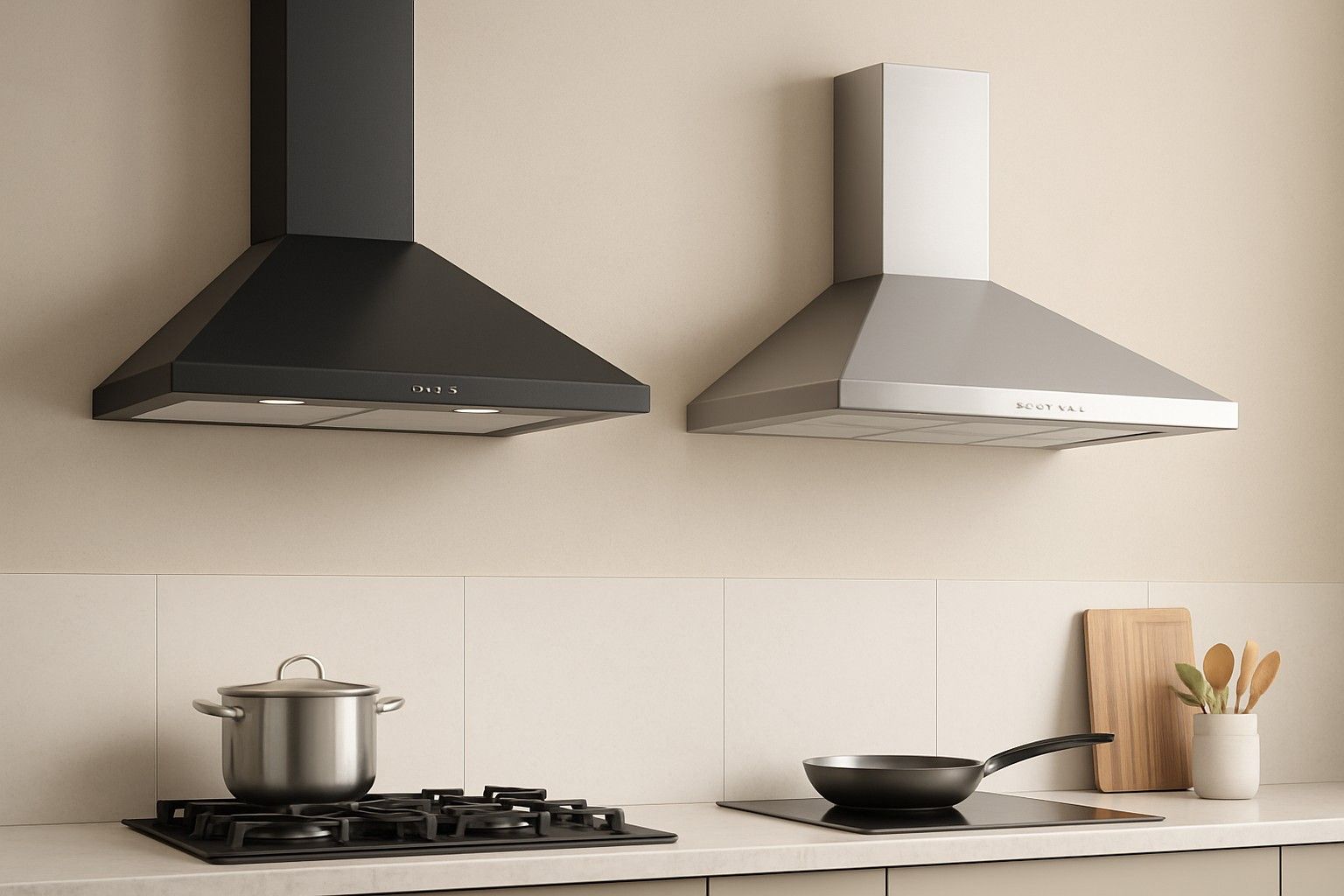
If you're stuck between a ducted and a ductless kitchen chimney, the honest answer is that your building's layout decides more of this than your budget does. Both types clear smoke and grease from Indian cooking, but they do it in completely different ways, and one of them simply won't work in every flat. This article walks through exactly how each works, where each one struggles, and how to match the choice to your kitchen instead of guessing.
How Ducted and Ductless Chimneys Remove Smoke
A ducted chimney pulls smoke, steam, and oil particles off the cooktop and pushes them through a pipe that exits outside the building, usually through an exterior wall or a shaft. The air actually leaves your kitchen, which is why ducted models handle heavy smoke and strong odours far more convincingly. A ductless (recirculating) chimney does the opposite: it draws the same air in, forces it through a carbon or charcoal filter to trap odour and some grease, and then blows the cleaned air straight back into the kitchen. Nothing leaves the room.
This one design difference explains almost every other trade-off you'll read about between the two. Ducted units need a physical exit point and rely on the duct length and number of bends staying short, because every bend cuts suction power. Ductless units skip all of that plumbing but ask the carbon filter to do work that outdoor venting does for free, which is why that filter needs replacing far more often. Neither design is universally better; they solve the smoke-removal problem in different ways, and which one wins depends entirely on what your kitchen's walls and ceiling will allow, which is the question the next section deals with directly.
Why Ducting Is Hard in Many Indian Apartments
The core problem is architectural, not mechanical. A ducted chimney needs a straight-ish path from the hob to an outside wall, a window vent, or a common exhaust shaft, and a huge number of Indian apartments simply don't offer one. Kitchens tucked into the interior of a flat, especially in high-rise towers where the kitchen wall faces a corridor or another flat rather than open air, have no legal or practical exit point for a duct. Housing society rules add another layer: many RWAs and builder-managed societies restrict drilling through external walls or altering the building facade, and some outright ban visible ducting on balconies facing the street.
Even where an exit exists, the duct run itself can defeat the purpose. A long duct with two or three bends to reach the nearest wall reduces suction so much that the chimney effectively performs worse than a well-specified ductless unit installed correctly. Older housing stock and independent houses tend to have more flexibility since walls can be drilled and the kitchen often sits on an outer wall by design, while newer high-rise apartments, especially mid-tier towers with compact kitchen layouts, are the segment where this becomes a genuine blocker rather than a minor inconvenience. If you haven't checked whether your kitchen wall is an exterior wall, that's the first thing to confirm before you fall in love with a ducted model.
Performance Difference for Indian Frying and Curries
Indian cooking is unusually demanding on a chimney because tempering, deep frying, and slow-cooked curries generate sustained oily smoke, not the occasional steam puff that Western kitchen exhaust systems are designed around. A ducted chimney handles this load better because it's physically removing the smoke and grease-laden air rather than trying to scrub it clean and recirculate it. For a kitchen that fries regularly, makes heavy tadka, or cooks with mustard oil and strong spices, a ducted unit will noticeably clear the air faster and leave less residual smell on curtains, walls, and cabinet fronts.
A ductless chimney can still perform respectably, but only if the carbon filter is fresh and the suction rating is genuinely high enough for your cooking volume, since the air being pushed back into the room hasn't actually been vented. Odour control is the weak point: carbon filters are good at trapping smell for a while but degrade steadily, and by the time they're due for replacement a ductless unit's real-world performance drops noticeably compared to when it was new. For light cooking, occasional frying, or a household that mostly steams, sautés, or cooks lower-oil meals, the gap between the two narrows a lot and a ductless chimney is genuinely adequate. For a kitchen that fries daily or cooks rich, oil-heavy Indian food as the norm, ducted still has a real, measurable edge in how quickly and completely the air actually clears.
Filter and Maintenance Differences Between the Two
The maintenance burden splits along the same line as performance. A ducted chimney typically uses a baffle or mesh filter designed to catch grease before it's vented outside, and these filters are usually washable, either by hand or in some cases in a dishwasher, with auto-clean models using a thermal cycle to loosen grease on their own. Upkeep here is mostly about periodic cleaning rather than buying anything, and how filters differ between these designs (including the specific mesh, baffle, and carbon-cartridge types available across price tiers) is worth reading in detail before you shortlist a model.
A ductless chimney depends on a carbon or charcoal filter as its primary defence against odour, and this filter is a consumable, not a wash-and-reuse part. It needs replacement every few months of regular use, and that's a recurring cost that ducted owners simply don't carry. Skip a replacement and you won't get an obvious failure, just a slow decline in how well the unit controls smell, which is easy to miss until the kitchen starts smelling faintly of last week's cooking. Some ductless units combine a washable grease mesh with a replaceable carbon filter, which softens the cost slightly but doesn't remove it. If ongoing filter spend matters to your budget, that's a real, recurring line item to factor in beyond the upfront price of the chimney itself but filters and servicing aren't the only ongoing cost either. The motor runs every time you cook, and that electricity draw adds up the same way it does for any appliance left running daily, which raises the obvious next question: what does a chimney actually cost every month to run, electricity and filters combined, based on your size, daily cooking hours and local tariff?
Which Type Fits a Rented vs Owned Home
Ownership status changes this decision almost as much as the kitchen layout does. In a rented flat, drilling through an exterior wall for ducting usually needs landlord permission, and many landlords are reluctant to approve any structural change, however minor, especially in older buildings or societies with facade restrictions. A ductless chimney sidesteps this entirely: it mounts on the wall or under a cabinet with no exterior modification needed, which makes it the practical default for most rented Indian homes, particularly shorter-term tenancies where you don't want to invest in modifications you can't take with you or reverse easily.
In an owned flat, especially one where the kitchen sits on an outer wall, ducted becomes far more viable since you control the decision to drill and can plan the shortest possible duct run at the time of your kitchen renovation or fit-out. It's still worth checking your society's rules even as an owner, since some managed apartment complexes control what can be mounted or drilled on shared external walls regardless of who owns the flat inside. The broader installation constraints in rented flats, including what deposit or damage clauses to watch for and how installers handle wall drilling, are covered in more depth separately and are worth reading before you commit either way, since the wrong assumption here can mean paying for a chimney you then can't install as intended.
Making the Final Call for Your Kitchen
Reduce the decision to two checks: can your kitchen physically vent outside without a long, bent duct run, and are you renting or restricted by society rules on wall drilling. If the answer to the first is no, or the second rules out drilling, a ductless chimney is the sensible choice regardless of how much you cook, and a good unit with a strong suction rating and fresh carbon filter will manage typical Indian cooking loads reasonably well. If you can vent outside cleanly and you fry or temper heavily, ducted is worth the extra installation effort for the real gain in smoke and odour clearance.
Across the market, prices span ₹2,999 to ₹45,990, with an average around ₹12,999, and both ducted and ductless models show up across the ₹4,999, ₹11,999, and ₹24,999 tiers, so budget alone won't force your hand here; the structural and rental questions will. It's worth reading this decision alongside the rest of what shapes a chimney purchase, so weigh this against the other buying factors covered in the main buying guide before you finalise a model, since suction rating, size, and control type all interact with the ducted-versus-ductless choice rather than standing apart from it.
The ducted-versus-ductless question isn't really about which technology performs better in isolation; it's about what your kitchen's walls, your society's rules, and your tenancy status will actually allow, and once you've answered those, the right type for your home stops being a guess.

Comments
Be the first to comment.