Kitchen Chimney Price Guide: Tiers and Whether Today's Price Is Fair
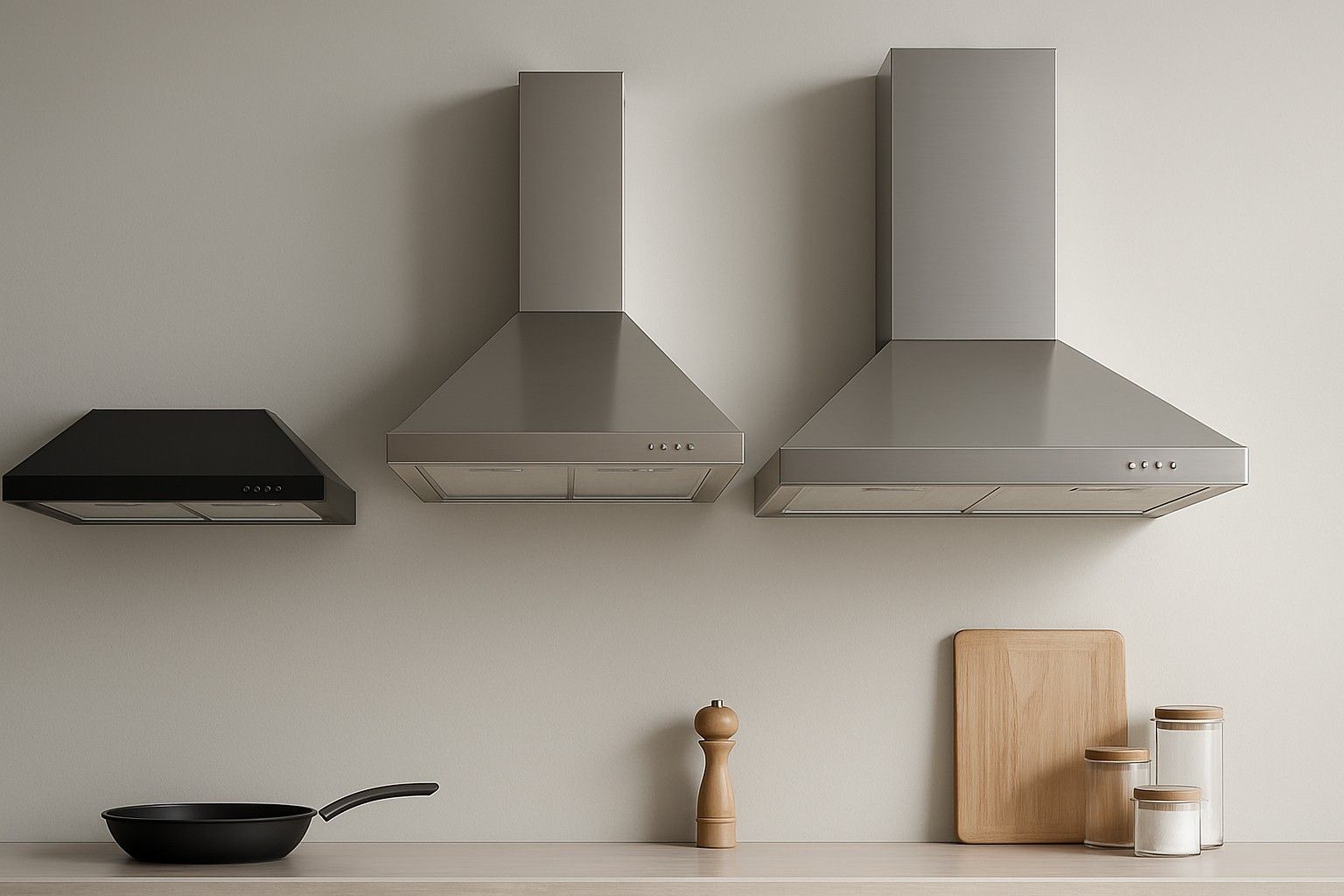
If you're standing in front of a chimney listing wondering whether the number on screen is a fair price or an inflated one, you're asking the right question at the right time. Kitchen chimneys in India span a wide range, from ₹2,999 to ₹45,990, and knowing what separates those tiers is what turns a guess into a confident purchase. This guide breaks down what each budget band actually buys you, and how to read a price against its own history rather than against a vague sense of "expensive" or "cheap."
What You Get in Each Budget Tier
Kitchen chimney pricing in India isn't random. It tracks a fairly predictable set of features: suction power, filter type, chimney width, noise levels, build material, and how much of the cleaning is automated versus manual. As you move up from ₹2,999 toward ₹45,990, you're mostly paying for stronger motors, better-sealed baffle or auto-clean filters, quieter operation, and smarter controls like touch panels or gesture sensors. You are rarely paying for a fundamentally different product category — a chimney at any price still does the same core job of pulling smoke and grease-laden air out of your kitchen.
What changes is how well and how effortlessly it does that job over years of daily cooking. A low-cost unit with a basic mesh filter will work on day one, but it demands weekly manual cleaning and its suction may not be sized for heavy Indian cooking with tempering, frying, and spice-heavy gravies. A pricier auto-clean model handles grease buildup with far less hands-on maintenance, but that convenience has a real cost attached. Knowing which trade-offs matter to your kitchen and cooking style — rather than assuming higher price always means better fit — is the actual decision here, and it's why the tiers below matter more than the sticker price alone.
Entry-Level Chimneys Under ₹4,999
Chimneys priced under ₹4,999 are built for kitchens with light to moderate cooking loads and tighter budgets. At this tier, you're typically looking at mesh or baffle filters that need manual washing every one to two weeks, motors with modest suction ratings, and simpler control layouts, often a knob or basic push-button panel rather than touch or motion controls. Chimney width is commonly on the smaller side, which suits compact kitchens but may under-serve a larger stove setup or a kitchen with two burners in heavy daily use.
This tier makes sense if you cook in moderate quantities, don't fry frequently, and are willing to clean the filter yourself on a regular schedule. It's also a sensible choice for a second kitchen, a rental home, or a first-time buyer who wants basic smoke and odor extraction without a large upfront outlay. Where this tier falls short is in sustained heavy use: if your kitchen sees daily deep frying or large joint-family cooking volumes, an underpowered unit here will struggle to keep pace, and you'll notice grease settling on nearby surfaces faster than it should. For light, everyday Indian cooking, though, these chimneys do the essential job without asking you to spend more than you need to.
Mid-Range Picks in ₹11,999
The ₹11,999 band is where most Indian kitchens find their actual match. This is where suction power steps up meaningfully, filter options broaden to include baffle filters designed for oil-heavy cooking, and you start seeing genuine auto-clean mechanisms rather than just marketing language for a slightly easier-to-remove filter. Noise levels are usually better controlled at this tier too, which matters if your kitchen is open to a living or dining area.
This is also the tier where chimney sizing starts to matter more, because a wider hob or a kitchen with heavier daily cooking needs a chimney whose suction and dimensions are actually matched to the space, not just picked by price. It's worth taking the time to match suction and size to your budget rather than assuming any chimney in this range will perform the same in every kitchen. Two units priced identically in this band can behave very differently if one is undersized for a large gas stove and the other isn't. For most households cooking three meals a day with regular frying and tempering, this tier offers the clearest balance between upfront cost and years of low-maintenance performance, which is why it accounts for the bulk of sales in this category.
Premium Chimneys in ₹24,999
Once you move into the ₹24,999 range, you're paying for refinement rather than a fundamentally new feature set. Expect stronger, quieter motors, sleeker designs in glass and steel, higher-end auto-clean systems that need oil emptied only occasionally rather than filters scrubbed, and smart touches like gesture control, timers, and app connectivity on some models. Build quality also tends to be more consistent at this tier, with better-sealed joints and longer-lasting internal components.
The honest question at this price point isn't whether the chimney works better — it usually does — but whether the specific features you're paying extra for actually solve a problem you have. If your household already manages weekly filter cleaning without complaint, some of this tier's premium is going toward convenience you may not fully use. It's worth working through whether auto-clean justifies the higher price before assuming the top tier is automatically the right call. For large kitchens, heavy daily cooking volumes, or households that specifically want to minimize hands-on maintenance over the years, the spend in this tier is easy to justify. For lighter, simpler cooking routines, a mid-range unit may deliver nearly the same day-to-day result for meaningfully less money.
Reading Price History From ₹2,999 to ₹45,990
A single listed price tells you very little on its own. What matters is where that price sits within the chimney's own historical range, which across this category runs from ₹2,999 at the low end to ₹45,990 at the top. A chimney that has genuinely spent most of its history closer to the upper part of that range and is currently priced toward the middle is a different situation than one that has always hovered near its lowest point and hasn't moved much at all.
This is where price history does more work than a specification sheet. Two chimneys can carry the same listed price today, but if one regularly trades near ₹2,999 and is currently priced well above that pattern, it's telling you something different than a chimney that consistently sits closer to ₹45,990 and is currently priced at a typical point in its own range. Rather than trying to time a purchase around a hoped-for future drop, the more useful approach is to check where today's price falls relative to that specific model's own historical pattern, not the category's widest extremes. A chimney priced near the lower end of its personal history is a reasonable buy today regardless of where the broader ₹2,999-to-₹45,990 category range sits, because your decision should rest on that unit's own track record, not on the category ceiling or floor.
Is Today's Price a Good Deal Against the ₹12,999 Average?
The category average of ₹12,999 is a useful reference point, but only as a starting frame, not a verdict on its own. A chimney priced below ₹12,999 isn't automatically a good deal if it's a stripped-down unit with a small motor that doesn't fit your kitchen's cooking load, and one priced above ₹12,999 isn't automatically overpriced if it comes with a stronger motor, better filter system, and features that match how you actually cook. The average is a midpoint across every tier and feature combination in the market, so use it to sense-check a price, not to decide the purchase outright.
The more reliable approach is to combine three things: where the price sits relative to that specific chimney's own historical range, whether its features match your kitchen's size and cooking habits, and where it lands relative to ₹12,999 as a general sanity check. If a chimney is priced near or below its own historical norm, offers suction and filter features suited to your cooking volume, and isn't wildly above ₹12,999 for what it delivers, that's a fair price to act on today. There's no benefit in waiting on the chance of a future drop when the current price already checks out against real history. At this point it helps to bring your budget back to the full decision, where sizing, suction, and maintenance all come together alongside price.
Between the tier breakdowns and the price-history approach above, you now have a concrete way to answer both halves of the original question: what a given budget actually buys, and whether the number in front of you is fair. Use the tier that matches your kitchen's cooking load first, then check that specific price against its own history rather than against the category's widest range, and you can commit to a purchase today with a clear reason behind it.

Comments
Be the first to comment.