Chimney Cleaning, Auto-Clean and Maintenance Costs Explained
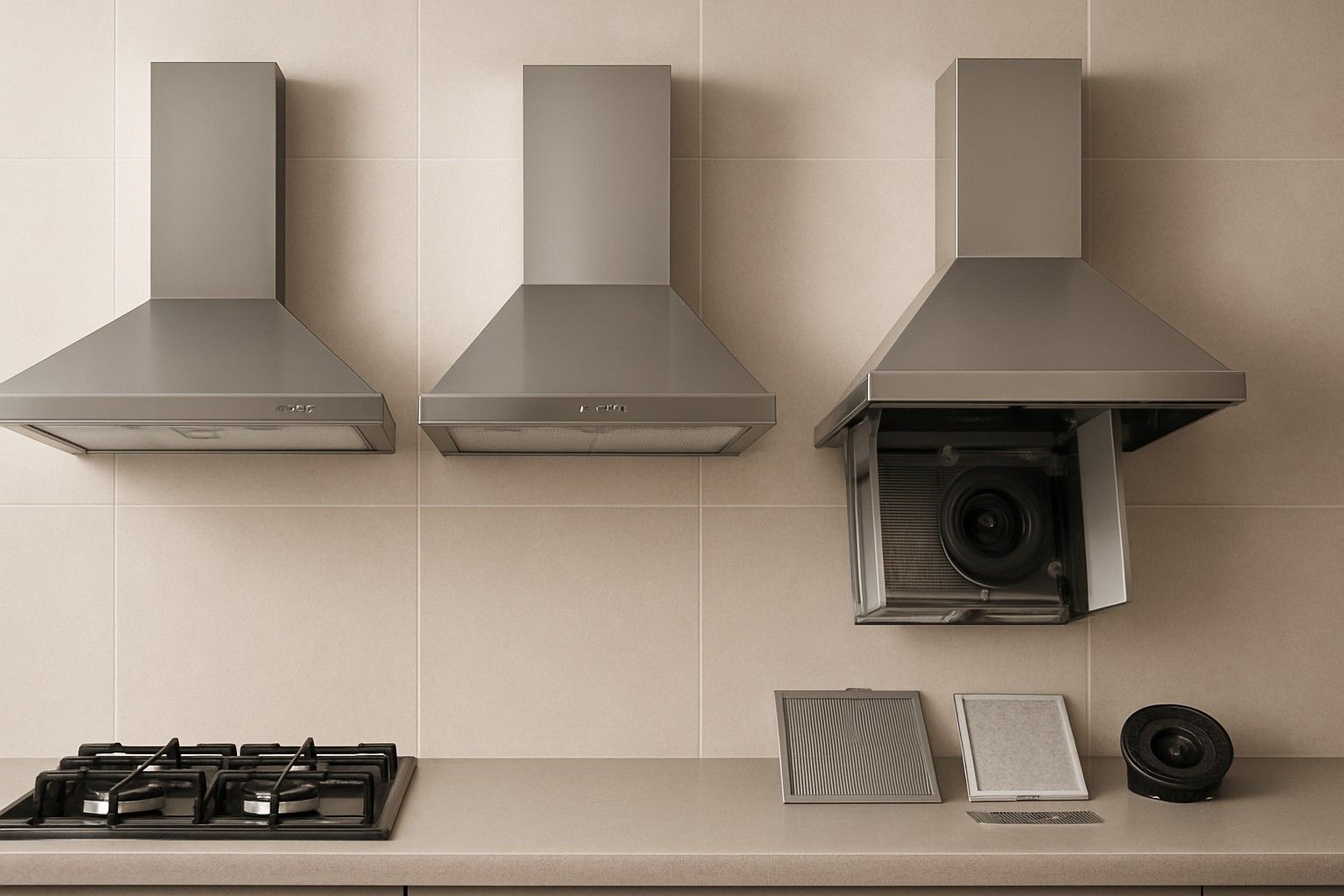
If you're staring at two chimneys, one with "auto-clean" stamped on the box and one without, and trying to work out whether the difference is worth paying for, this is the question this article answers. Kitchen chimneys in India collect grease fast, especially with regular tempering and frying, so upkeep isn't optional — it's just a matter of how much effort and money it costs you over the years you own the unit, a number you can actually pin down with this chimney electricity and filter cost calculator rather than guess at.
How Auto-Clean Actually Works
Auto-clean chimneys use a small internal heating element, usually built into a cup or bowl-shaped chamber near the motor, to warm the collected oil and condense it into a separate removable container. Instead of grease coating the mesh filter, oil vapour is spun off by the fan and drawn toward this heating chamber, where it liquefies and drips down into a collection cup that you empty every few weeks. The chimney body and blower still get greasy over time, just far more slowly than a mesh filter would.
What auto-clean does not do is eliminate cleaning entirely. You still need to empty the oil collection cup periodically, wipe down the outer body and the underside of the hood, and occasionally check the chamber for any residue buildup. The mechanism reduces the frequency and difficulty of cleaning rather than removing the task altogether. It also depends on consistent use — if you run the chimney on low speed for short bursts, the heating element may not get hot enough to fully liquefy thicker grease, and you'll notice more manual cleaning is still needed than the marketing suggests.
For Indian kitchens where tadka and deep frying are near-daily activities, this distinction matters. Auto-clean is most effective when the chimney runs at a reasonably high speed for the full duration of cooking, which is also generally recommended for proper suction anyway.
Is Auto-Clean Worth the Extra Cost?
Auto-clean chimneys typically sit at a price premium over comparable manual-clean models, and understanding how auto-clean pricing fits the tiers helps put that premium in context. Chimneys priced under ₹4,999 rarely include auto-clean at all — it starts appearing more consistently in the ₹11,999 range and becomes close to standard by the time you're in the ₹24,999 bracket. Given that the overall market spans ₹2,999 to ₹45,990 with an average around ₹12,999, auto-clean is genuinely a mid-tier-and-above feature rather than something you should expect at the entry point.
Whether it's worth the extra spend comes down to how often you cook and how much oil-heavy cooking you do. If your kitchen sees daily frying, tempering, or high-volume cooking, the time saved on scrubbing a mesh filter every week adds up quickly, and auto-clean earns its premium within a year or two of use. If you cook lightly, or mostly do low-oil cooking, a well-maintained manual filter chimney at a lower price point may serve you just as well, and the money saved could go toward a better duct kit or a higher suction motor instead.
The honest way to think about it is not "auto-clean versus no auto-clean" in isolation, but where that spend fits against everything else the chimney needs to do well — suction power, noise levels, and build quality. A chimney with auto-clean but weak suction is not a better buy than one with strong suction and a manual filter you clean monthly.
Cleaning Effort by Filter Type
The type of filter your chimney uses affects cleaning effort as much as, or more than, whether it has auto-clean. Mesh filters, common in budget models, are made of layered aluminium mesh that physically traps grease particles. They need washing every one to two weeks in a heavy-cooking kitchen, either by hand with hot water and detergent or in a dishwasher if the manual permits it. Left too long, mesh filters clog and suction drops noticeably, which is one of the most common complaints with lower-priced chimneys.
Baffle filters work differently — they use curved metal baffles that force air to change direction repeatedly, causing grease to settle by gravity rather than getting trapped in a mesh. This design needs far less frequent cleaning, often once a month or even longer, and baffle filters hold up better over years of use without losing suction efficiency. This is one reason baffle filters have become the norm in mid-range and higher chimneys rather than a premium add-on.
Charcoal or carbon filters, found mostly in ductless setups, work on odour rather than grease and need periodic replacement rather than cleaning, typically every few months depending on use. For a full breakdown of how these filter types compare on suction retention and long-term performance, which filter needs the least cleaning is worth reading before you decide, since the filter type ultimately shapes your weekly maintenance routine more than any single marketed feature.
Servicing, Spare Parts and Warranty in India
Most kitchen chimneys sold in India come with a warranty period covering the motor, typically longer than the warranty on the rest of the unit, since the motor is the most expensive component to replace. It's worth checking the exact warranty terms at purchase, since motor coverage and general product coverage are often listed separately, and some brands offer extended motor warranties as a value-add rather than a standard inclusion.
Servicing needs are generally light if the filter is cleaned on schedule. A professional deep-clean once a year, covering the blower, ducting, and internal chamber, is a reasonable habit even for auto-clean models, since the heating element and oil collection cup can still accumulate residue that home cleaning misses. This service is usually a paid call-out unless it falls within a specific service package offered at purchase.
Spare parts — oil collection cups, filter units, remote controls, or the heating element in auto-clean models — are generally available through brand service centres in most Indian cities, though availability can be slower in smaller towns. Before buying, it's reasonable to check whether the brand has a visible service network in your city, since this affects how quickly you can get a replacement part if a filter cracks or a control panel stops responding. A cheaper chimney from a brand with poor local service presence can end up costing more in downtime and courier charges for parts than a slightly pricier one from a brand with a service centre nearby.
Long-Term Upkeep You Should Budget For
Beyond the purchase price, a chimney has a handful of recurring costs worth planning for rather than being surprised by. Mesh filter cleaning is essentially free if done at home, but takes time weekly. Baffle filters cost less in time but may need an occasional degreasing soak with a stronger solution every few months. Charcoal filter replacement, where applicable, is a recurring small cost every few months. Auto-clean units add the minor cost of emptying and occasionally cleaning the oil collection cup, plus a slightly higher upfront price as covered earlier.
Over a five-to-seven-year ownership period, which is a reasonable lifespan for a well-maintained chimney, expect at least one motor check-up, possible replacement of the mesh or baffle filter if damaged, and periodic ducting inspection if you're on a ducted setup, since grease buildup inside ducts can quietly reduce suction efficiency without being obvious from outside. None of these costs are large individually, but ignoring them compounds — a poorly maintained chimney loses suction gradually, and by the time it's noticeably weak, the motor may be working harder than it should, shortening its life further.
If you're still comparing models and want to weigh upkeep alongside the buying decision, it's worth treating maintenance as part of the total cost of ownership rather than an afterthought once the chimney is already installed. A chimney priced near ₹2,999 with high upkeep can end up costing more over time than a ₹12,999-range model that's easier to maintain.
Auto-clean is worth the premium if your kitchen sees regular oil-heavy cooking and you'd rather pay upfront for less scrubbing later; it's optional if your cooking is lighter or your budget is tighter. Either way, the real answer to how much upkeep a chimney needs comes down to filter type, how consistently you run it at proper speed, and whether you keep servicing on schedule rather than waiting for suction to visibly drop.
Comments
Be the first to comment.