Recliner Care and Warranty: Cleaning, Mechanism Upkeep and Common Repairs
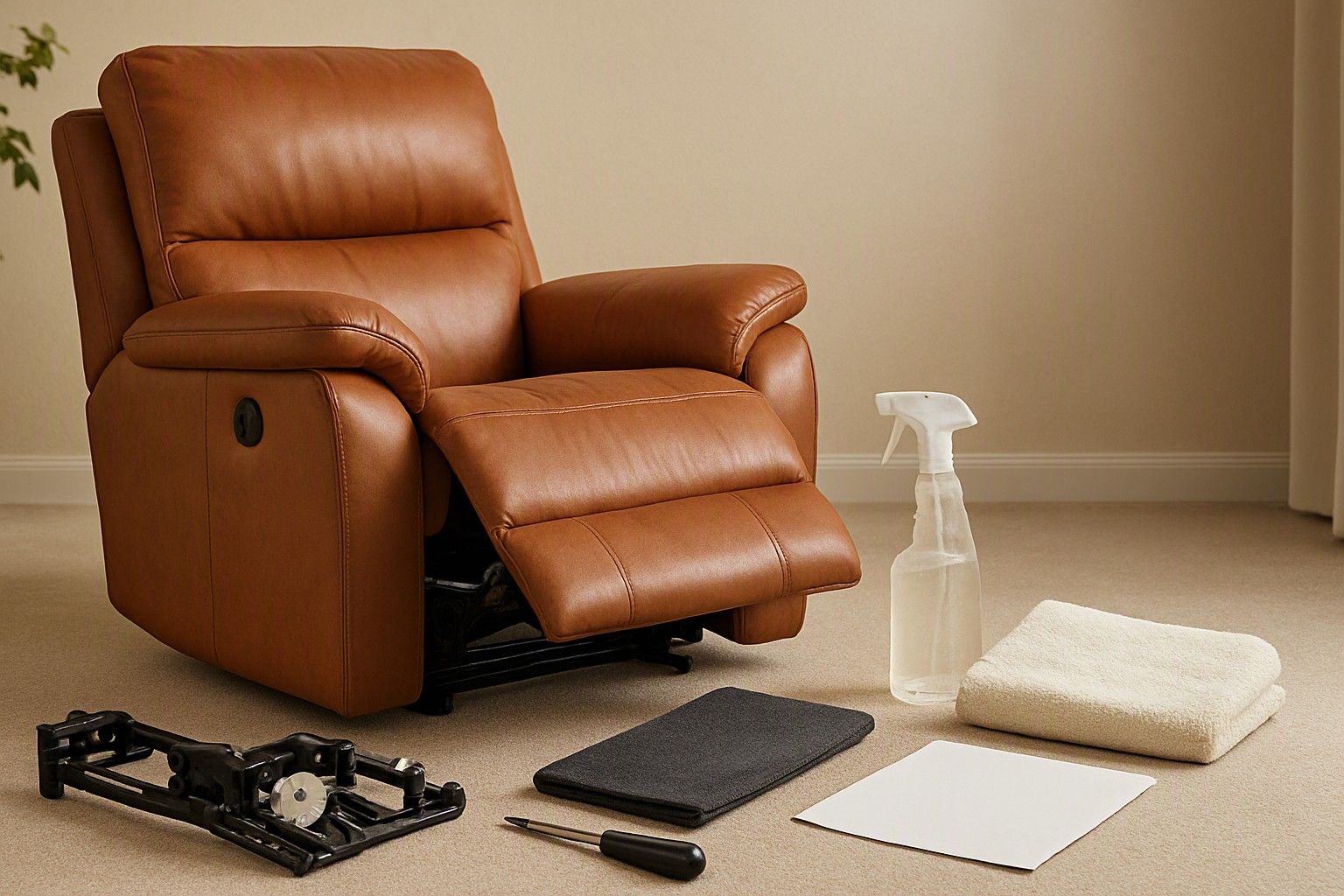
If you already own a recliner, or are about to take delivery of one, this article covers how to keep the mechanism and the upholstery working for years, and what a warranty will and won't pay for. It is written for Indian homes, where dust, monsoon humidity, strong afternoon sun and daily AC use all affect how a recliner ages. You will find routine care steps, a repair guide, and a plain reading of warranty terms.
Cleaning Leatherette, Fabric and Leather the Right Way
Start with a weekly dry wipe or a soft-brush vacuum pass, because Indian dust works into seams and fabric weave and acts like fine sandpaper over time. Pay attention to the folds where the backrest meets the seat, and the gap around the armrests.
For leatherette, use a soft cloth dampened with water and a few drops of mild soap, then wipe dry straight away. Avoid alcohol-based cleaners, thinners and household bleach, which dry out the top coat and speed up peeling. Hair oil, sweat and body lotion are the usual culprits on headrests, so wipe the headrest more often than the rest of the chair.
For fabric, vacuum first, then blot spills instead of rubbing. Chai, turmeric and curry stains need prompt blotting with a cloth and a little mild detergent solution. Test any cleaner on a hidden patch first.
For genuine leather, use only a damp cloth for regular cleaning and a leather-specific conditioner a few times a year, since the hide dries and cracks in dry weather and grows mildew in damp weather.
Fabric choice shapes how much of this work you'll face, so read which upholstery ages best in Indian conditions if you are still deciding between materials or planning a re-cover.
Keeping the Mechanism Smooth: Lubrication and Loose Bolts
Most recliner complaints, such as squeaks, a stiff handle or a footrest that won't fully close, come from a dry or loose mechanism rather than a broken one. A quick check every three to four months prevents most of them.
Tilt the recliner back or lay it on its side on a blanket, and look at the metal linkage under the seat. Tighten any bolts or nuts that have worked loose with the correct spanner or Allen key. Do not over-tighten, since that can bind the joints and make movement stiff.
For lubrication, apply a small amount of silicone spray or light machine grease to the pivot points and sliding joints, then work the recliner open and shut a few times and wipe off the excess. Excess lubricant attracts dust and can stain the upholstery or the floor. Avoid cooking oil, which turns sticky and gums up the joints.
Watch for warning signs: a grinding sound, uneven footrest movement, or a visibly bent metal arm. These point to a worn or damaged part, and continuing to use the chair can make the damage worse. Also, never let a child or an adult push the footrest down by sitting on it while it is extended, since that is a common cause of bent linkages.
Protecting Against Sun, Humidity and AC Vents
Direct sunlight through a window is one of the quickest ways to age a recliner. It fades fabric, and it dries leatherette and leather until they crack or peel. If the chair sits near a window, use curtains or sheer blinds during peak afternoon hours, or rotate its position every few months so the wear is even.
Humidity is the other threat. In monsoon months, damp air can cause mildew on fabric and leather, and encourage rust on exposed metal parts. Keep the recliner a little away from damp walls, and on coastal or very humid sites, run a fan or dehumidifier in closed rooms. A few silica gel sachets tucked under the seat help in a room you rarely use. If the recliner has been unused for a long stretch, give it an airing and a dry wipe before sitting.
A cold AC vent blowing straight onto upholstery repeatedly can dry out leatherette and leather, particularly alongside warm sun at other hours of the day. Position the chair so the airflow does not hit it directly.
A breathable cover helps when the room is unused or when you are away, but avoid plastic sheets that trap moisture.
Motor, Wiring and Remote Care for Powered Models
A powered recliner adds three things to look after: the motor, the cable and power adapter, and the control or remote. None of them needs much attention if you avoid a few common mistakes.
Keep the cable routed where it cannot be pinched by the moving frame, stepped on or chewed by pets. Check it occasionally for fraying or kinks. Plug the adapter into a surge-protected socket, because voltage fluctuations and power cuts followed by sudden surges are common in many Indian homes, and electronics suffer most at that moment.
Keep liquids away from the control and the motor housing, and dust the motor area with a dry cloth rather than spraying cleaner near it. If the recliner has a battery backup, follow the maker's instructions on charging and replacement.
Do not force the recliner when it stops moving. Straining a motor against a blocked footrest, a heavy object on the footrest or an overloaded seat can damage the gears or burn out the motor. Check what is blocking it, and unplug it before looking underneath.
If the remote stops responding, try fresh batteries first, then check the connectors. A motor that hums but does not move, or burning smells, mean you should unplug the chair and call service.
Common Repairs and Who Handles Them
Some repairs you can handle yourself, and others should go to a technician.
Safe for you to do: tightening loose bolts, applying lubricant, replacing remote batteries, repositioning a trapped cable, and cleaning stained or dusty upholstery. A stuck handle, for instance, often just needs a drop of lubricant and tightened fixings.
Better left to the brand's service team or an authorised technician: a bent or broken linkage, a failed motor, wiring faults, a sagging or collapsed seat base, and any repair on a chair still under warranty. A DIY repair or an unauthorised workshop visit can void warranty coverage, so check the terms before anyone opens the chair.
For a local upholsterer or carpenter: torn leatherette, worn fabric, flattened foam and minor frame repairs once the warranty has ended. A good upholsterer can re-cover a worn recliner or replace the seat foam. Ask for a sample swatch and a fixed quote, and check how the new covering will be fitted around the mechanism.
If your recliner sits near the ₹18,000 average for the category, get a repair quote before deciding. A major mechanism or motor job can take a large share of what the chair cost, so weigh repair against replacement honestly.
Reading the Warranty: Frame, Mechanism, Upholstery and Motor
A single line saying "one year warranty" tells you very little. Recliner warranties usually split coverage by component, and each part can have a different term.
- Frame: usually the longest cover, since it is the structural body. Check whether it covers breakage and cracking, and whether it excludes damage from overloading.
- Mechanism: covers the moving linkage. Look for exclusions on misuse, such as sitting on the footrest, and whether the warranty requires basic upkeep.
- Upholstery: typically the shortest cover, and often limited to manufacturing defects such as peeling or stitching failure. Wear, stains, sun fading and pet damage are commonly excluded.
- Motor and electronics: a separate term in powered models, often covering the motor, control and adapter but not damage from power surges.
Also ask what the warranty actually delivers: repair, replacement of the part, or replacement of the whole chair; who pays for pickup and transport; and whether the clock starts on invoice date or delivery date. Keep the invoice, warranty card and photos of the chair on delivery.
The strongest protection is a recliner that rarely needs a claim, so use these build quality signs that cut down on repair visits when comparing models.
After-Sales Questions Worth Asking at Purchase
A warranty is only as good as the service behind it. Before you pay, put these questions to the seller or brand:
- Does the brand have its own service technicians in your city, or does it depend on third-party workshops?
- Who do you call for a claim, the store or the brand, and is there a phone number or app for complaints?
- What is the typical time to visit and fix, and are spare parts such as handles, linkages and motors stocked locally?
- Is installation or assembly included, and is a technician visit free for the first few months?
- Are repairs after the warranty period available at a fixed charge, and are spares available for several years?
- What does the return or replacement policy say for a defect found on delivery?
Get the answers in writing, or on the invoice or warranty card, rather than relying on a verbal promise. Support quality does not always rise with price, but it can differ between tiers, so ask the same questions whether you are shopping in the ₹10,000, ₹20,000 or ₹35,000 tier.
It also pays to fold after-sales support into your original recliner choice so that service reach counts alongside comfort, size and upholstery when you decide.
A recliner that gets a regular dust-off, a check of its bolts every few months, protection from sun and damp, and a clear understanding of its warranty will usually outlast one that is ignored until it breaks. Keep the invoice and warranty card safe, do the simple upkeep yourself, and call for service early when something sounds or feels wrong.
Comments
Be the first to comment.