Choosing a Recliner for Elderly Parents: Lift-Assist, Seat Height and Simple Controls
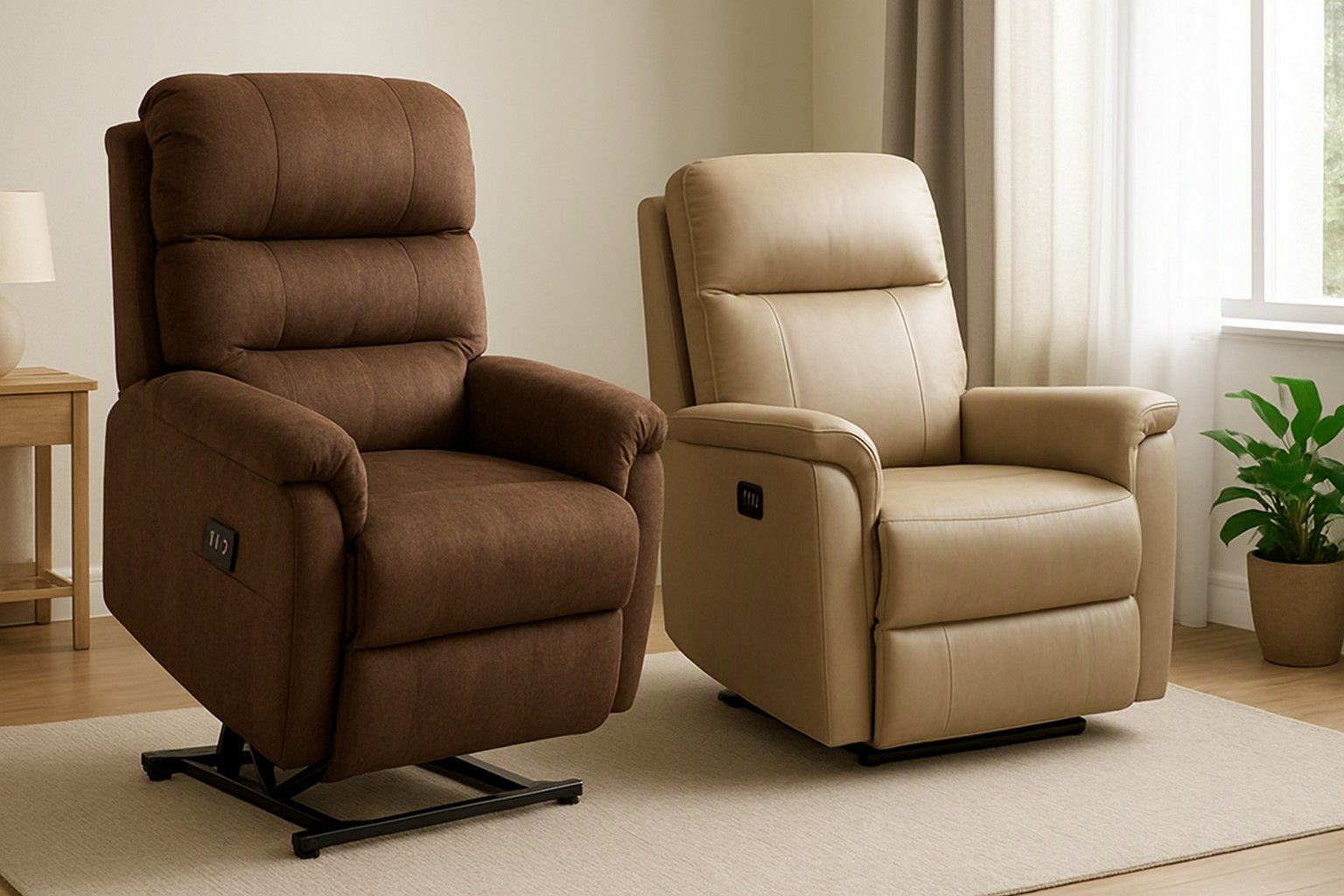
If your parents struggle to stand up from a sofa or bed because of knee or back pain, the right recliner is the one that helps them get out, not just lie back. This guide covers which mechanism, seat height and controls suit an ageing parent, so you can decide on a type before comparing models. If you are buying mainly for your own comfort, the general buying guide will serve you better.
Why Getting Up Matters More Than Lying Back
Most recliner marketing shows the reclined position. For an elderly parent with arthritic knees or a weak lower back, the harder moment is the exit. Pushing out of a deep, low seat loads the knees and lower back, and a chair that tilts them backward makes it worse.
There is also a safety side. A parent who finds the chair hard to leave may stay in it too long, skip walks, or try to rush out and lose balance. A good chair for them lets them sit down without dropping, change position without effort and stand with their feet already under them.
So judge any recliner in three steps: sitting down, reclining and getting up. Ask your parent to try all three in a showroom, not only the lying-back position. A chair that feels luxurious reclined but needs a hard push to rise is the wrong chair, however good the cushioning. The rest of this guide follows that order: mechanism, seat dimensions, controls, then everyday practicalities.
Lift-and-Recline Chairs vs Standard Powered Recliners
A lift-and-recline chair has a motor that tilts the whole seat forward and upward, so the parent ends up nearly standing with their feet on the floor. A standard powered recliner only moves the backrest and footrest at the touch of a button. It saves effort while reclining but does nothing to help the person stand.
For a parent with knee pain or poor leg strength, a lift-assist mechanism is the one that addresses the real problem. It cuts the effort at the knee at the hardest moment. For a parent who is still steady on their feet and only wants relief while resting, a standard powered recliner is usually enough, and it tends to cost less.
A manual recliner, which relies on a lever or on body weight against the backrest, is the weakest choice for this use. The footrest often needs a firm push to close, which is exactly what sore knees and weak backs struggle with. If you want to see where the motorized mechanism changes the experience, read how a basic motorized recliner differs from a manual one.
On cost, the category runs from ₹7,500 to ₹60,000, with an average of ₹18,000. Powered and lift-type mechanisms generally sit above manual ones within that spread, so budget for the mechanism your parent needs first and treat finishes and extra features as secondary.
Seat Height, Cushion Firmness and Armrest Grip
Seat height decides how much work the knees do. If the seat is too low, the parent has to lift their own body weight from a deep bend. A seat that lets the feet rest flat with knees roughly level with the hips is easier to rise from. Measure your parent's knee-to-floor height and have them sit in the chair in person; never judge it from a photograph.
Cushion firmness is the next trade-off. Very soft, sink-in cushions feel comfortable for a minute but make standing harder because the body has to climb out of the foam. Medium-firm cushions that hold their shape give back support, and they stay supportive over years of daily use. For back pain, check that the lower back is supported rather than the spine slumping into a hollow.
Armrests are easy to overlook. Parents push on them to rise, so they should be sturdy, at a comfortable height and wide enough to grip, with no sharp edges or wobble. Ask them to press down hard on each armrest in the showroom and see if it moves. Also check that the chair is wide enough for them to sit and rise without scraping the sides, and that the footrest opens clear of their shins.
Simple Controls and Backup During Outages
A control that confuses is a control that goes unused. For elderly parents, look for large, clearly labelled buttons or a simple handset with only the functions they need, such as up, down and recline. Avoid layouts with many small keys, since stiff fingers and weak eyesight make them hard to use. A handset on a short cord, or one built into the armrest within easy reach, is better than one that slips down the side of the cushion.
Power cuts are a real consideration in many Indian homes. A powered chair that stops mid-recline, or that cannot be lowered, can leave a parent stuck. Before you buy, ask the seller what happens during an outage: does the chair have a battery backup, a manual release, or an emergency lowering option? Get the answer in plain terms and see it demonstrated.
If the chair has no backup at all, think about where it will sit and whether a family member is usually around. A household with frequent outages and a parent who is alone for long hours should weigh this more heavily. You can also place the chair near a socket on a surge-protected extension, and keep it away from loose, trailing wires that someone could trip on.
Fitting One Into a Shared Living Room or Parent's Bedroom
Many parents' recliners end up in a busy living room or a compact bedroom, so floor space matters. A recliner needs room behind it for the backrest to tilt, and in front for the footrest to extend. A lift chair also needs clear space ahead so your parent can stand and step away without bumping into a table or bed frame.
Start by marking out the open and reclined footprints with tape on the floor. Then check the walking path: a parent using a stick or walker needs a clear, uncluttered route from the chair to the door or bathroom. Do not place the chair where it blocks that path or where a rug edge could catch a foot.
In a shared living room, put the chair where your parent can see the television and join conversation, and avoid a spot in direct sunlight or under a fan blast. In a bedroom, a corner near the bed can make transfers easier, but leave space on at least one side for a helper. For a step-by-step method, see measuring a bedroom corner for a recliner. Also check that the delivery path through the door, lift and stairs can take the chair's packed size.
Upholstery That Is Easy to Wipe and Stays Cool
For older users, spills and accidents are more likely, and cleaning needs to be quick. Smooth, wipeable surfaces such as leatherette or similar coated materials are easy to clean with a damp cloth, which suits a chair used for long hours and sometimes for meals or tea. Fabric feels softer and breathes better, but it absorbs stains and takes more effort to clean. If you choose fabric, check whether the covers can be removed or treated.
Indian summers add a second concern. Coated and synthetic surfaces can feel sticky and hot in humid weather, especially for a parent who sits for hours. A breathable fabric or a perforated finish can help, and a thin cotton throw over the seat is a cheap way to cool a wipeable chair.
Grip matters too. Very slippery surfaces make it easy to slide forward while sitting down, so choose a texture that holds without feeling rough on thin or sensitive skin. Check seams and edges where dust and spills collect. A chair your parent can keep clean with little help is one that stays in use.
Questions to Ask Before Buying for a Parent
Take these questions to the showroom or put them to an online seller before you commit:
- Does the chair lift the seat to help standing, or does it only recline?
- What is the seat height, and can my parent sit with feet flat on the floor and rise without a hard push?
- Are the armrests firm, and do they stay steady under pressure?
- Are the controls large, labelled and easy to reach?
- What happens during a power cut, and can the chair be lowered or closed manually?
- What is the weight capacity, and is the frame suitable for my parent's build?
- Can the covering be wiped clean, and does it stay comfortable in hot weather?
- Will the chair fit the room, the delivery route and the walking path?
- What does the warranty cover for the motor and the frame, and who handles service in my city?
On price, the category runs from ₹7,500 to ₹60,000, and the budget tiers are under ₹10,000, ₹20,000 and ₹35,000. Decide which tier fits your family, then choose the mechanism your parent needs inside it. Since the comfort and safety of the chair come from the mechanism and fit, do not trade those away for finishes. For checks that apply to every buyer, such as frame build, warranty and delivery, use the general recliner checks every household should run.
For parents with knee or back pain, the right recliner is the one that helps them stand: a lift-assist chair if their legs are weak, a standard powered model if they are steady, and a manual recliner only when they have strength to spare. Check seat height, armrests, simple controls and power-cut backup in person with your parent seated, and you can make this decision with confidence now.
Comments
Be the first to comment.