Leatherette, Fabric or Leather: Recliner Upholstery for Indian Heat and Humidity
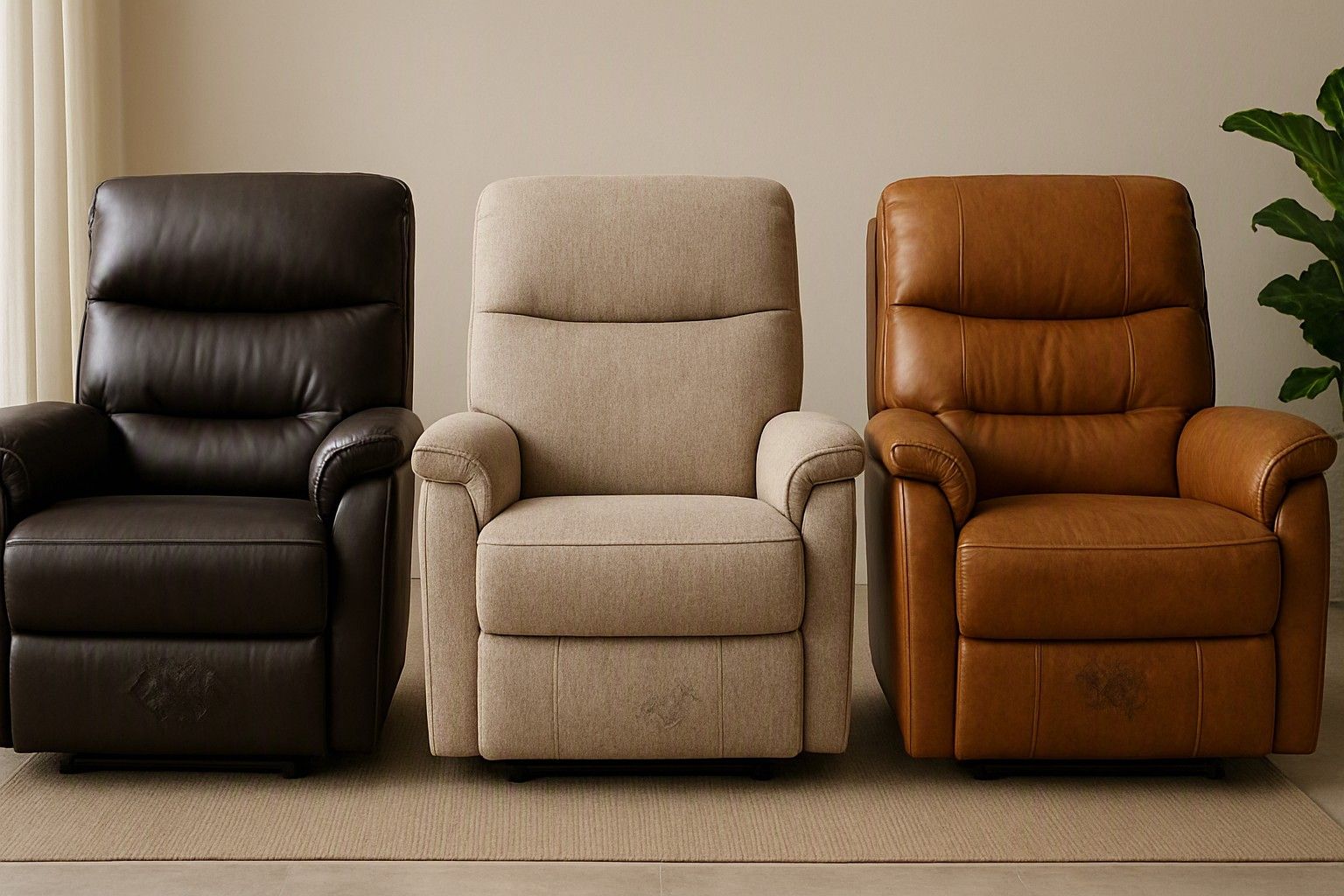
If you are choosing between leatherette and fabric for a recliner that has to live through Indian summers and monsoons, this article is for you. In short: fabric is kinder on sweat and long sitting hours, while good-quality leatherette is easier to wipe clean and works well in air-conditioned rooms. The rest of the page explains why, where each material fails, and how to choose for your city and household.
Leatherette, Fabric, Genuine Leather and Suede-Feel Options Explained
Four upholstery types turn up on recliners in India, and the names on listings are often vague.
Leatherette (sold as PU, faux leather or synthetic leather) is a plastic-based coating, usually polyurethane or PVC, bonded to a fabric backing. It looks like leather, wipes clean and is the most common material across price tiers. Quality varies enormously, which is why it gets both praise and complaints.
Fabric covers woven cotton blends, polyester and linen-look textiles. It feels softer and warmer to the touch, and it is not coated, so there is no layer to peel. It does hold dust and soak up spills.
Genuine leather is real animal hide. It is the most durable and the most expensive. Be careful with wording like "leather match" or "leather touch points", which usually means real leather only on the headrest or armrests, with synthetic material elsewhere.
Suede-feel options are brushed microfibre or velvet-like synthetics. They feel plush, but they are fabric underneath, so they stain easily and attract hair. Treat them as a soft fabric, not a separate category.
How Each Material Handles Humid Summers and Sweat
Leatherette does not absorb anything. Sweat sits between your skin and the surface, so shorts or a thin kurta can stick to it on a humid afternoon. In a room with an AC or a strong fan this is manageable. In a closed, unventilated room it becomes the main reason people stop using the recliner.
Fabric absorbs moisture and lets air move, so it feels cooler against the skin. The downside is that it can stay damp in monsoon months, and in coastal cities a seldom-used fabric recliner can pick up a musty smell if the room is shut for long periods.
Genuine leather breathes a little better than leatherette, but it still feels warm in peak heat. It also dries out and cracks if it is never conditioned.
Suede-feel fabrics soak up sweat well and feel soft, but they hold warmth, and sweat marks on darker or lighter shades can stay visible. Overall, humid heat favours fabric for comfort, while leatherette works if you sit mainly in a cooled room.
Why Cheap Leatherette Peels and How to Spot Better PU
Peeling is rarely random. Leatherette is a thin plastic layer glued to a fabric base, and humidity, heat, body oils, sunscreen and constant rubbing at the armrests and headrest slowly break down the bond between the two. A thin coating on a weak backing fails first, usually where you touch the chair most. The surface flakes, then the backing shows through.
You can spot stronger PU before buying:
- Feel: it should feel supple and slightly soft, not stiff, slick or plasticky.
- Bend test: fold a corner or press along a seam. A surface that whitens, wrinkles sharply or looks stretched is a warning sign.
- Backing: look at an exposed edge or the underside. A tight, even fabric base is a better sign than a loose, thin one.
- Smell: a strong chemical smell often points to a cheaper coating.
- Stitching and seams: even, tight stitching on high-wear areas suggests careful finishing.
- Warranty wording: check whether upholstery peeling is covered, and for how long.
No PU is peel-proof, but good grades last far longer, and you can slow down peeling and cracking at home with the right cleaning habits and sun and heat avoidance.
Dust, Spills, Kids and Pets
Dust is a daily fact in most Indian homes, and the material decides how much work it creates. Leatherette and genuine leather can be wiped with a damp cloth in seconds, and a spilled cup of chai or a splash of juice stays on the surface long enough to clean. That makes them practical for homes with young children.
Fabric is harder. Dust settles into the weave, and spills soak in quickly, so tea, curry and ink can leave marks. A tight weave and darker or patterned shades hide this better, and covers that can be removed and washed make life easier. Suede-feel fabrics are the least forgiving, because they stain easily and pet hair clings to them.
Pets change the picture. Cat claws and dog nails can puncture or scratch leatherette and leather, and once the coating breaks it tends to keep peeling. A tightly woven fabric usually hides and tolerates scratching better, though it collects hair. In homes with both kids and pets, a tight-weave fabric in a mid-tone shade, or a sturdy PU you are willing to protect, is the realistic choice.
Breathability for Long Sitting Hours
A recliner is a chair people sit in for hours: a film, a cricket match, an afternoon nap. That makes breathability matter more than it does for a dining chair.
Fabric wins here. Air and moisture pass through it, so the contact points on your back, thighs and arms stay drier. Leatherette traps heat, and the longer you stay in it, the more it sticks. Some leatherette recliners have perforated or ventilated panels, which help a little, but the base layer is still a plastic coating and won't match fabric.
Genuine leather sits in between. It handles warmth better than synthetic leatherette, but it is not a cool material in peak summer.
If you prefer leatherette for looks or easy cleaning, a thin cotton throw or a cotton towel over the seat and headrest cuts the stickiness and also reduces body-oil contact with the surface. Some models combine fabric on the seat and back with PU on the armrests, which is a sensible compromise if you want comfort and easier cleaning on the parts you touch most.
Which Materials Show Up at Which Price
Across the category, recliner prices run from ₹7,500 to ₹60,000, with an average around ₹18,000. Upholstery quality tends to move with those tiers, so knowing what usually appears where helps you judge whether a listing's material claim is believable. You can also read more on which upholstery grades usually appear at each price tier.
In the ₹10,000 tier, expect basic leatherette with thinner coatings or simple fabric. Both can serve well if you are realistic about wear, but the leatherette here is the grade most likely to peel early.
In the ₹20,000 tier, thicker and better-finished PU becomes common, along with better woven fabrics and suede-feel options. For many households this is where the material starts to look like a sound long-term choice.
In the ₹35,000 tier, you more often find higher-grade PU, fabrics with tighter weaves, and leather-match combinations. Full genuine leather is more typical toward the upper end of the range.
The point is to buy the best-made material your budget supports today, and a well-made fabric at a lower tier can outlast a poor leatherette at a higher one.
Picking a Material for Your City and Household
Start with your climate. In humid coastal cities such as Mumbai, Chennai, Kochi or Kolkata, fabric is usually the comfortable pick, provided the room gets some airflow and the recliner is used regularly. If you only sit in an air-conditioned room, a good-grade PU works well and is easier to maintain.
In drier, dustier regions such as Delhi NCR, Rajasthan and much of the north, leatherette's wipe-clean surface helps with dust, though summer heat makes it uncomfortable without cooling. Fabric is fine if you can vacuum or brush it regularly. In milder cities such as Bengaluru or Pune, either material works, so choose by household habits.
Then look at who uses the chair:
- Young children: leatherette or a tight, dark-toned fabric that tolerates spills.
- Pets: tight-weave fabric if claws are a concern, or sturdy PU if you can keep claws away.
- Elderly users who sit long hours: fabric, or fabric with PU armrests, for breathability.
- Low-maintenance preference: good-grade PU, with realistic expectations of its lifespan.
Once the material is settled, fit the upholstery decision into your wider recliner shortlist alongside mechanism, size and warranty.
So, which recliner material is best for hot and humid Indian weather? Fabric is the more comfortable choice for long sitting hours in humid heat, while good-grade leatherette makes sense if you sit mainly in a cooled room and want easy cleaning. Check the PU quality, think about kids and pets, and match the material to your budget tier and your city, and you can decide today with confidence.

Comments
Be the first to comment.