Smart TV Price Tiers in India: What ₹12,000, ₹30,000 and ₹65,000 Actually Get You
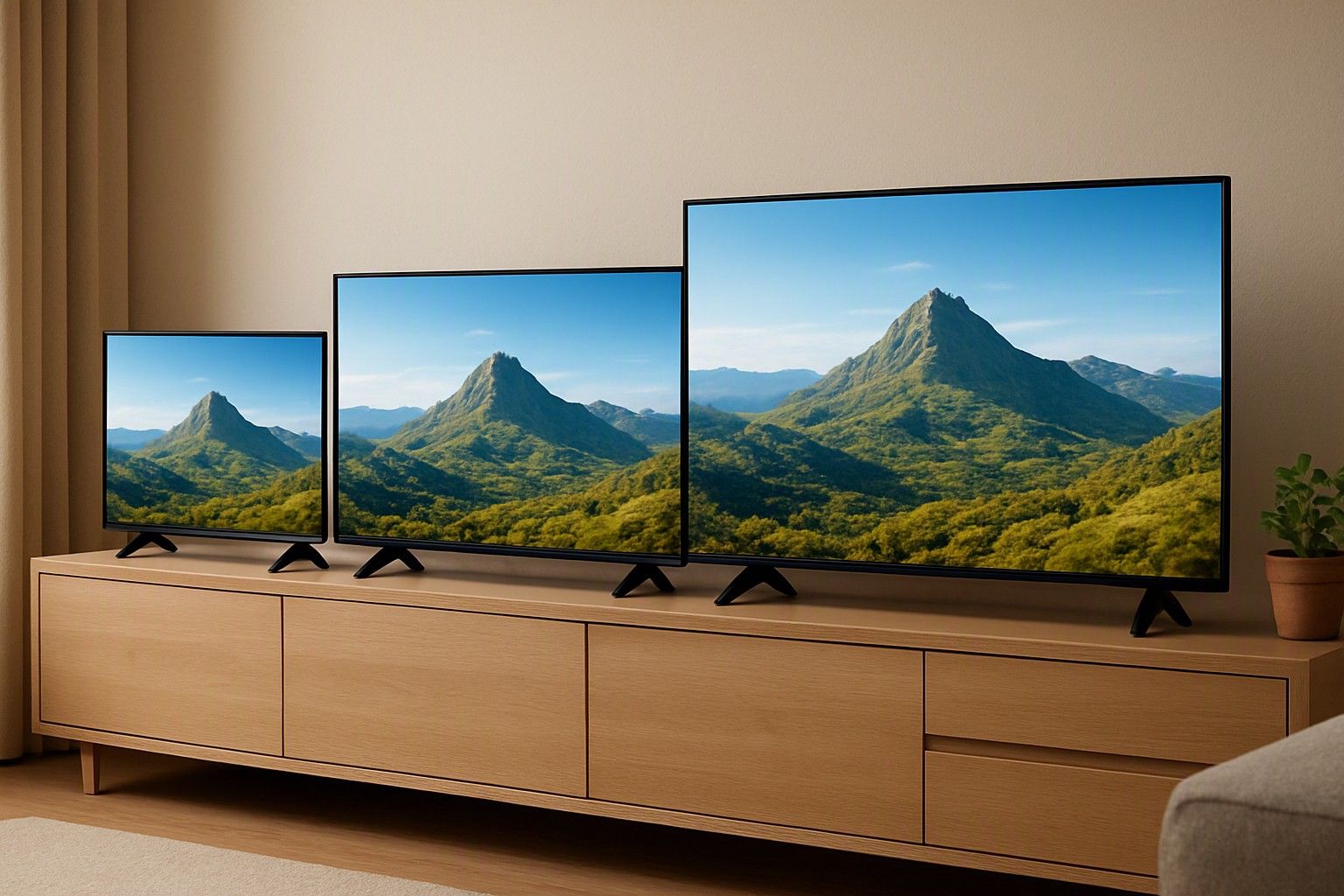
If you already know what you can spend and want to know what kind of smart TV that money realistically buys, and whether the price on the listing is fair, this article is for you. Smart TV prices in India run from ₹6,999 to ₹3,00,000, and the gap between those two ends is mostly about panel technology, processing and size. Below, each budget band is broken down by what you can expect, what you will have to give up, and how to judge a quoted price today.
Where Prices Start and End: ₹6,999 to ₹3,00,000
The category opens at ₹6,999 and stretches to ₹3,00,000. That is a very wide spread, and it helps to read it as three broad bands rather than one continuous ladder. The first band is under ₹12,000, where you are buying a basic screen with smart apps added on. The second is ₹30,000, where 4K resolution and larger sizes become normal. The third is ₹65,000, where better panel technology and stronger picture processing start to separate one TV from another.
Above that third band, prices climb steeply into very large screens and premium panel types. Most households never need to go there, and the extra money above the third band buys refinement more than a change in what you can do with the TV.
The most useful habit is to decide your band first. Once you know it, you can ignore models far outside it and compare like with like. Comparing a small entry-level set with a large premium one tells you nothing about whether either price is fair.
Under ₹12,000: Sizes and Compromises to Expect
Under ₹12,000, expect smaller screens, mostly in the 32 inch range of smart tv, with some larger sizes appearing at the upper end of the band. At 32 inches, resolution is usually HD Ready. Full HD is possible on some models, and it is worth looking for if you will sit close to the screen. True 4K at this price is rare, and where it appears on a larger size, check the other specifications closely.
The compromises are consistent. Processors are modest and memory is limited, so menus and app launches can feel slow, especially after a year of updates. Speakers are adequate for news and everyday viewing but thin for films. Colour and brightness are acceptable in a lit room and can look flat in a bright one. Remotes are basic, and the apps pre-installed are the main ones, with limited storage for adding more.
None of this makes the band a poor choice. A bedroom, a kitchen, a rented flat or a secondary room is exactly where these TVs make sense. What you are really buying here is a reliable screen with the streaming apps you use, so prioritise a recognised app ecosystem, a sensible warranty and a sturdy build over chasing specifications the panel cannot make use of.
₹30,000: The 43 to 55 Inch 4K Sweet Spot
Stepping into ₹30,000 changes what the TV can do for the household. This is where 4K resolution becomes standard on 43 inch to 55 inch screens, HDR support is common, and processors are quick enough that the interface stops feeling like a compromise. For most Indian living rooms, this is the band where the balance between cost and viewing experience is hardest to beat.
Size matters more than the label suggests here. A 43 inch set suits a smaller room and a viewing distance of a few feet, while 50 and 55 inch sets reward a larger sofa distance. Before you pick, check the screen sizes that fit this budget band against your own room, because a bigger screen in a tight space is less comfortable than a correctly sized one.
The trade-offs that remain are mostly about picture refinement. Contrast and peak brightness are usually good but not striking, and upscaling of lower-resolution content, such as older cable channels, can look soft. Sound is better than the entry band but still benefits from a soundbar if you watch films often. If the main use is streaming, sport and family viewing, this band covers it without much to regret.
₹65,000: When QLED, Mini LED and Better Processing Appear
The ₹65,000 band is where the panel itself starts to change. QLED, which uses a quantum dot layer to produce richer and more accurate colour, becomes common. Towards the upper end, Mini LED backlighting appears, using many small lighting zones to improve contrast and brightness control. Processing improves as well, which shows up in cleaner upscaling of non-4K content, smoother motion and better handling of HDR scenes.
If you want to know what the panel upgrade at this level really delivers, the answer depends on your room and content. In a bright living room, higher brightness and better local dimming are visible straight away. In a dim room with film or high-quality streaming, the contrast gains are easier to see. Sound, higher refresh rates for gaming and sport, and more capable operating systems also tend to improve here.
The honest caution is that not every set in this band is equal. Some carry a QLED label with only modest backlight control, while others invest properly in dimming and processing. Check the actual panel features, not just the technology name. If your viewing is mostly casual, the tier below may serve you as well, and this band is worth it when picture quality is a real priority.
Judging Whether a Price Is Fair Against the ₹35,000 Category Average
The category average of ₹35,000 is a useful reference, but it is not a target. It sits inside the third band, pulled upward by large premium screens that stretch the range towards ₹3,00,000. Most buyers spend below it, so a price under the average does not automatically mean a bargain, and a price above it does not automatically mean you are overpaying.
A better test is to compare within the same size and specification group. For any quoted price, check these points:
- Size and resolution: a 43 inch 4K set and a 43 inch HD set belong in different price conversations.
- Panel type: a plain LED, a QLED and a Mini LED should not be priced as if they were the same.
- Refresh rate and HDR support: these matter for sport, gaming and film, and they separate otherwise similar models.
- Operating system and apps: check which streaming apps are supported and how much storage there is.
- Warranty and service: a longer warranty with good local service support is part of the value.
If a price fits its band and its specifications, it is fair, and you can buy with confidence at the current price. The aim is to match the set to your room and viewing habits, not to hunt for a lower number elsewhere.
Spending Smart Within Your Tier
Once your band is fixed, the way you spend inside it matters more than moving up to the next one. In practice that means choosing the right size for your room first, then putting money into the panel and processing, and only then into extras such as a slimmer design or additional ports. A slightly smaller screen with a better panel usually serves a household better than a larger screen with weak picture quality.
Also keep audio in mind. Built-in speakers are rarely the strongest part of any TV, so if you plan to add a soundbar, you can accept ordinary sound from the set itself and spend more on the display. If you will rely on the TV speakers, give them more weight.
For a fuller framework, you can decide what to prioritise once your budget band is fixed, which covers size, panel, smart features and after-sales support in one place. Use your band as a boundary, compare only within it, and choose the set whose specifications match how you actually watch.
You now have the answer to the question you came with: under ₹12,000 buys a dependable smaller screen, ₹30,000 buys the 4K sizes most homes are happy with, and ₹65,000 is where panel quality and processing start to show. Match the quoted price against its band, size and specifications rather than the category average, and you can decide today with confidence.

Comments
Be the first to comment.