How to Choose a Dishwasher That Handles Indian Utensils, Hard Water and Your Kitchen Layout
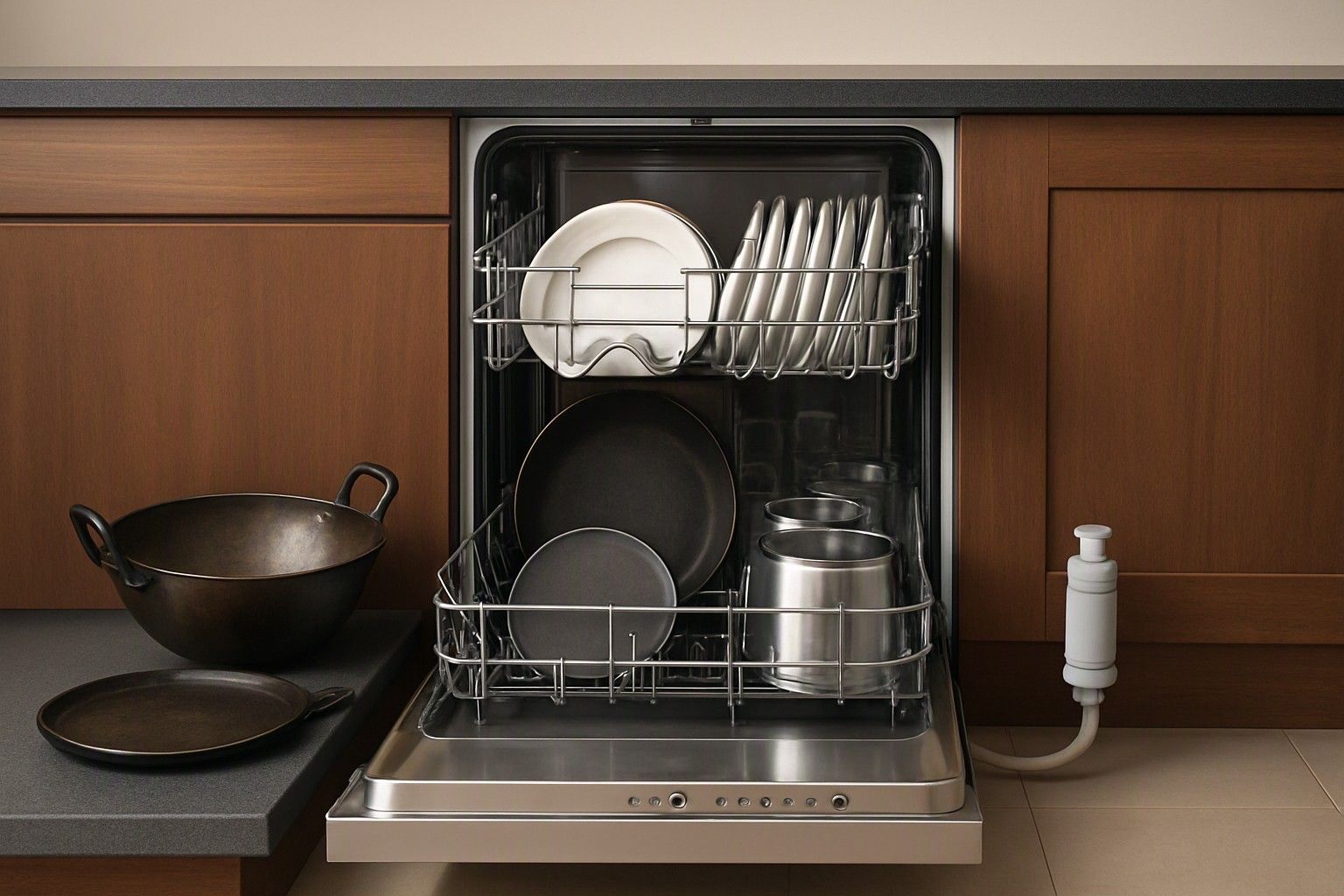
Buying a dishwasher in India means asking questions most global buying guides skip. Can it handle masala-coated kadais and scorched milk pans? Does it make sense alongside house help? Will your city's water, your sink plumbing and your kitchen layout cooperate? This guide sets out every part of that decision in order, from cleaning performance and value through type, capacity, water hardness, features, installation, pricing, common mistakes and long-term upkeep, and points you to a detailed article on each.
Will It Actually Clean Kadai, Tawa and Pressure Cooker Residue?
This is the doubt most Indian buyers start with, and the answer is more reassuring than many expect. Steel kadais, cookers and pans stained with tadka or scorched milk generally come out clean, provided leftover food is cleared away before loading. A small number of vessels are still better washed by hand, and knowing which ones prevents disappointment. Read how dishwashers handle oily Indian cookware and burnt milk before deciding a machine cannot keep up with your cooking.
Is It Worth Buying When You Already Have House Help?
A maid on the payroll does not automatically make a dishwasher redundant. The machine earns its place mainly when evening hours keep vanishing at the sink, when help turns up unpredictably, or when you want utensils cleaned at high temperature for hygiene. This guide weighs a machine against washing by hand across purchase price, monthly running expense, water and time, so you can compare monthly cost, water and time against hand washing and see where your household lands.
Freestanding, Built-In or Countertop: Matching the Type to Your Kitchen
All three formats clean in essentially the same way; what differs is placement, what each asks of your cabinetry, and how easily a technician can reach it later. A tenant, a family with a modular kitchen and someone with barely any free counter will usually land on different answers. Fixing the format before comparing features narrows the shortlist quickly. See which dishwasher format fits a modular or rented kitchen to settle this step first.
How Many Place Settings an Indian Household Really Needs
Box ratings count place settings for a Western-style meal, which is why a number that sounds roomy fills up fast once thalis, kadais and pressure cookers go in. As a rough marker, four people running two cycles daily usually manage with a 12-setting or 14-setting machine, while those who prefer a single daily run should lean towards 14. To size the load to your family and daily vessel count, work from what your kitchen actually produces rather than the label.
Hard Water: Why a Built-In Softener Matters in Many Indian Cities
Mineral-heavy supply shows up in a dishwasher as spotted steel and cloudy glassware. The clue is often already in your home: scaling inside the kettle or crusty deposits around a bathroom faucet suggest an inbuilt softener is worth having. If your supply is truly soft, you can drop the feature along with its salt top-ups. Before shortlisting, check whether your tap water needs an inbuilt softener.
Heater, Drying and Wash Programs Worth Paying For
A long spec sheet can hide the fact that only a handful of features shape results in a kitchen that cooks with ghee and masala every day. Three stand out: the heating element, how the machine dries, and a heavy-duty intensive cycle. This article walks through the wash programs and drying systems that make a real difference, what each adds to cycle time and electricity use, and which remaining options are sales talk more than substance.
Plumbing, Drain and Power Checks Before Delivery Day
Delivery goes smoothly when the kitchen is ready before the box arrives. You will need an earthed socket close by, a cold-water connection, a drain route into the sink outlet and enough clear floor or counter area. Most homes need no civil work, though voltage swings, awkward sink setups and weak pressure from a rooftop tank tend to cause hiccups. Use this checklist to prepare the inlet, drain and socket ahead of installation.
What Each Price Band Gets You, From ₹25,000 to ₹80,000
Dishwashers in India currently span ₹25,000 to ₹80,000, with the category averaging ₹42,000. Prices fall into three bands: ₹28,000, ₹45,000 and ₹65,000. This guide explains what each level usually includes, what the step up genuinely buys, and which expenses never appear on the price tag, so you can judge whether a quoted price is fair for the features offered and buy with confidence today.
Mistakes First-Time Dishwasher Buyers Commonly Make
Regret after a first purchase seldom comes from picking the wrong logo or finish. It usually traces back to overlooked basics: no heater, weak after-sales support, a cramped spot, untreated hard water, or kitchen routines that do not suit a machine. This guide covers six such slip-ups so you can avoid the errors that leave new owners disappointed.
Living With It: Salt, Rinse Aid, Detergent and Filter Care
Running costs do not end at checkout. Expect regular purchases of rinse aid, dishwasher detergent and softener salt, plus a filter that needs periodic cleaning, all of which matter more here because of monsoon damp, mineral-rich water and greasy curries. The routine itself is modest. Read about the ongoing upkeep and consumables a dishwasher demands, including do-it-yourself fixes for glasses that come out cloudy or a machine that starts to smell musty.
You now have the full route through a dishwasher purchase: whether it suits your cooking and household, which format and size fit your kitchen, how water and features affect results, what installation needs, what a fair price looks like and what ownership involves. Work through the sections that apply to you, and you will be ready to compare real machines and choose one with confidence.

Comments
Be the first to comment.