Hard Water and Dishwashers: Do You Need a Built-In Softener?
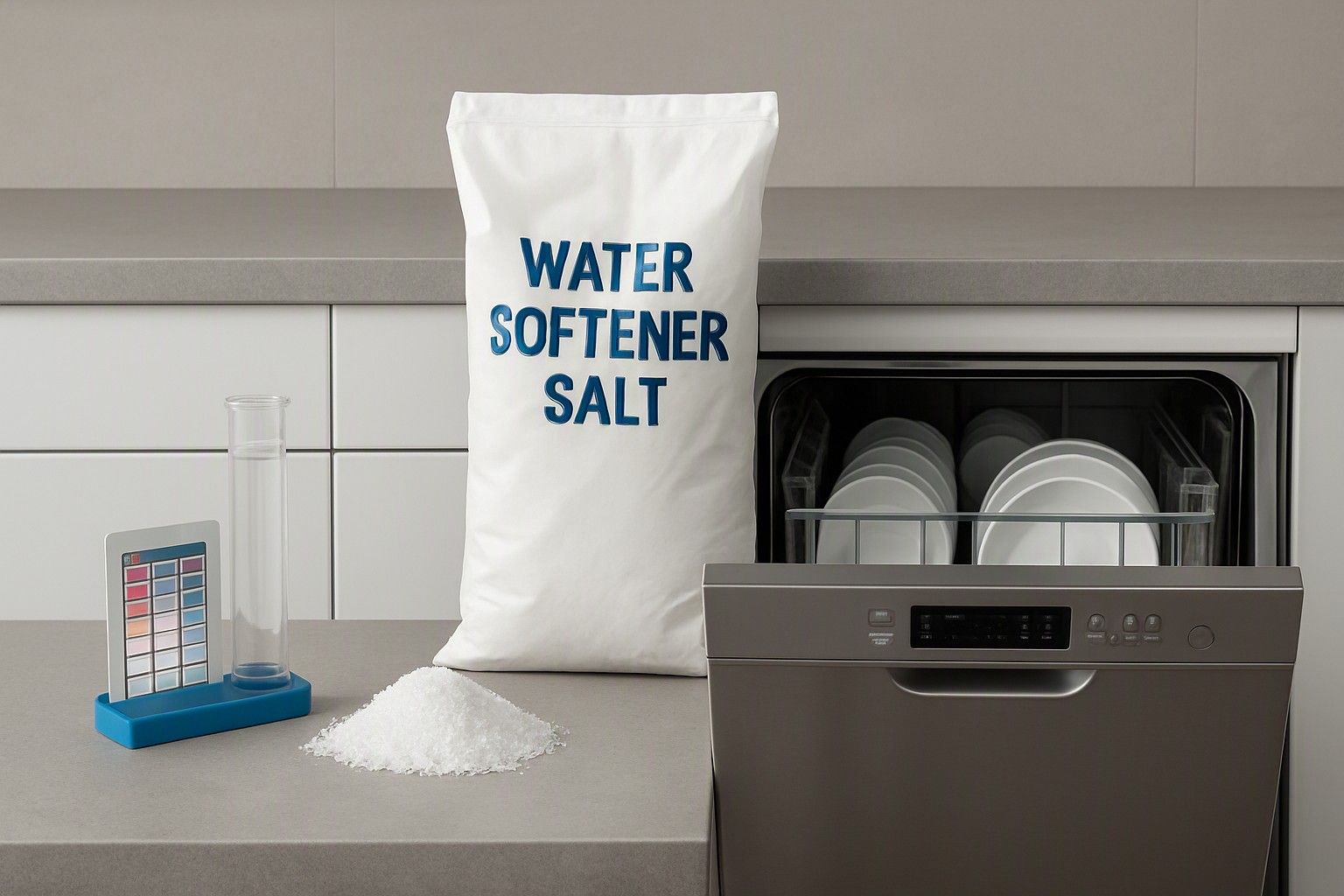
If your tap water leaves a white crust on the kettle or a chalky ring around the bathroom tap, it will leave spots on dishwasher-cleaned steel and glass too, and a built-in softener is worth looking for. If your water is genuinely soft, you can skip the feature and save yourself the salt routine. This article helps you work out which camp your home falls into before you shortlist a machine.
Why Hard Water Is a Common Problem in Indian Homes
Hardness comes from dissolved calcium and magnesium, which water picks up as it moves through rock and soil. Much of India depends on groundwater, and groundwater in many regions carries a heavy mineral load. Even homes on municipal supply often get water that is partly drawn from borewells or wells, so the supply is harder than people expect. Borewell and tanker water add their own variation on top.
A dishwasher makes the problem more visible than hand washing does. It heats water well above what you would use at the sink, and heat pushes dissolved minerals out of the water as solid scale. That scale builds on the heating element, the spray arms and the inner walls, and it dries onto your utensils as white spots when the final rinse evaporates. Stainless steel, dark glass and plastic show it most clearly.
So the question for an Indian buyer is rarely whether hard water exists. It is how hard yours is, and whether the machine you pick has a way of dealing with it. That is a model-selection factor in its own right, whichever of ₹28,000, ₹45,000 or ₹65,000 you are shopping in.
How to Check Your Water Hardness at Home
You do not need a lab to get a usable answer. Start with what you can already see: a thick white or greyish crust inside the kettle, a dull film on steel taps, or soap that refuses to lather are all signs of hard water.
For something firmer, try these three checks:
- Soap shake test: fill a clear bottle one-third with tap water, add a few drops of plain liquid soap and shake hard. Plenty of foam with clear water underneath suggests soft water. Little foam and a cloudy layer suggests hard water.
- Hardness test strips: these are cheap, dip-and-read strips that give an approximate reading in mg/L or degrees of hardness. They are accurate enough to choose a softener setting.
- Lab test: if you are on a borewell or a tanker, a lab report is the most reliable option, and it can also show iron and other contaminants.
Do not rely on a TDS meter alone. It measures total dissolved solids, which includes salts that do not cause scaling, so it can point you the wrong way. As a rough guide, readings below about 60 mg/L are soft, 120 to 180 mg/L is hard, and anything above that is very hard. Write your number down, because you will need it to set the dishwasher.
What a Built-In Softener Does and How Salt Works
A built-in softener is a small chamber of resin beads inside the dishwasher. As incoming water passes through, the beads grab calcium and magnesium and release sodium in exchange, so the water that reaches the wash is soft. This keeps scale off the heater and spray arms, and it lets the detergent clean properly.
The beads can only hold so much. Once they are full, the machine flushes them with a brine made from dishwasher salt, which restores them for the next cycles. This is why there is a salt compartment, usually near the base of the tub, and why a salt-low indicator is common. Use coarse dishwasher salt only. Table salt has fine grains and additives that can clog the system.
Harder water uses up the resin faster, so the salt gets consumed faster too. Your hardness setting tells the machine how much to regenerate. The routine is easy once you know it, and the guide on how often to refill softener salt covers the practical side of running one. The trade-off is simple: you accept a small, recurring task and a consumable in return for protection against scale and spots.
White Film, Spots and Cloudy Glasses: Causes and Fixes
These three problems look alike but have different causes, so it helps to separate them before changing anything.
White spots on steel and glass are dried mineral deposits from hard water. The fixes are a working softener with the right hardness setting, salt in the compartment, and rinse aid, which helps water sheet off instead of beading and drying into spots.
A white film across plates, the tub or the glass is usually limescale, sometimes mixed with detergent residue. It wipes off with a cloth dipped in vinegar. If hardness is high and the salt has run out, this is the first thing you will notice.
Cloudy glasses need a closer look. Soak one in white vinegar for a few minutes. If the haze clears, it was limescale, and the fixes above apply. If the haze stays, the glass is etched, which is permanent surface damage. Etching is more likely when water is very soft, the detergent dose is too high, or delicate glassware is washed hot. Over-softening is a real risk, so do not set the hardness level higher than your test supports.
A periodic machine-cleaning cycle with a dishwasher descaler or citric acid, as your manual allows, keeps scale off the heater.
Borewell and Tanker Water: Special Cases
Borewell water can be much harder than municipal supply, and the figure can shift with the season or the water table. It may also carry iron, which leaves orange or brown stains and is not something a standard dishwasher softener is designed to remove. If you see rust-coloured marks, test for iron and consider treating the water before it reaches the machine.
Tanker water has a different issue: consistency. Each delivery may come from a different source, so the hardness can change from one refill to the next. Test every few deliveries, or whenever spots start returning, and adjust the setting accordingly. Overhead tanks also collect sediment, and fine silt can clog the inlet.
If your water is very hard, the in-machine resin works harder and needs salt more often. Some households add a softener or filter at the tank outlet and let the dishwasher handle only the leftover hardness. Sediment filtering and adequate pressure matter as much as hardness here, and the notes on inlet filters and pressure needs for tank-fed supply explain what to arrange before the machine is installed. Sorting this out before delivery avoids the most common early complaints.
Adjustable Hardness Settings to Look For
Having a softener is not enough. You want to be able to match it to your water. When comparing models, check these points:
- Multiple hardness levels: a numbered scale, set through a dial, button combination or the control panel, lets you match the setting to your test result. A single fixed setting suits only some homes.
- A table in the manual: each level should map to a hardness range. Units vary between mg/L and degrees of hardness, so confirm which one the model uses before you compare it with your test strip.
- A salt-low indicator: this tells you when to refill so you are not guessing, and it protects the resin from running dry.
- Ability to switch the softener off: useful if your water is soft, or if you move to a different supply later.
If your test shows moderate to very hard water, treat a built-in softener with adjustable levels as a requirement on your shortlist, not an extra. If your water is soft, you can ignore it and put the budget towards other features. Either way, the same checklist applies, and where water quality sits among the other things to check is laid out in the main buying guide. Dishwashers here range from ₹25,000 to ₹80,000, with an average of ₹42,000, so you can make this decision within your budget today.
So, will hard water leave white spots on your utensils? If a simple test shows moderate to very hard water, yes, and a dishwasher with an adjustable built-in softener is the sensible choice. If your water is soft, you can leave the feature out. Test your water, note the number, and use it to shortlist with confidence.
Comments
Be the first to comment.