Dishwasher Prices in India: What ₹25,000 to ₹80,000 Buys at Each Level
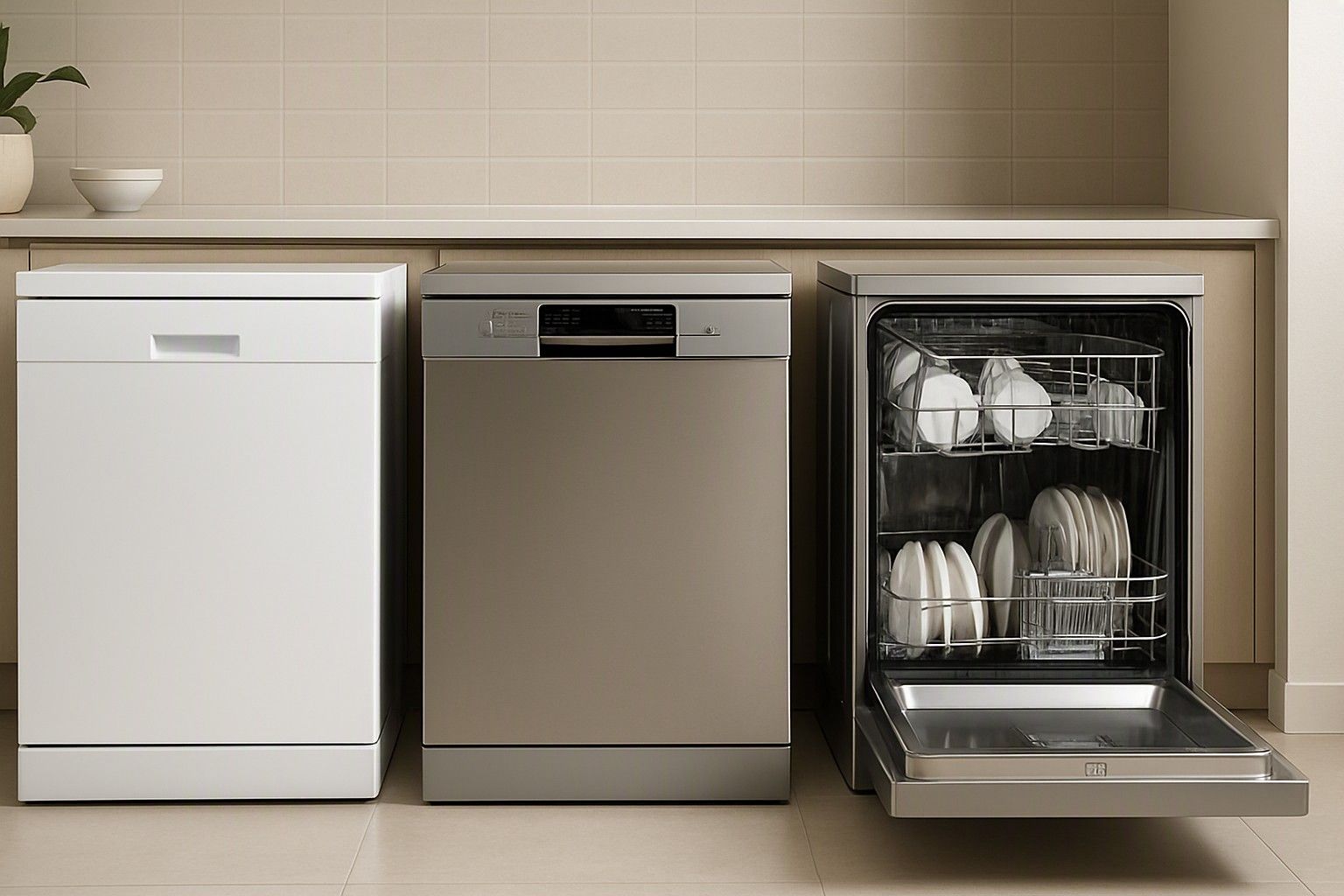
If you are looking at a dishwasher quote and wondering whether it is reasonable, this article is for you. It walks through what each price band in India typically includes, what the extra money pays for, and which costs sit outside the sticker price. By the end you should be able to place any quote against the category and decide with confidence.
How Dishwasher Prices Spread From ₹25,000 to ₹80,000
Dishwashers in India run from ₹25,000 at the low end to ₹80,000 at the top, with an average of ₹42,000. That average matters because it tells you where the bulk of the market sits: in the middle, not at either extreme.
Four things push a price up the scale. The first is capacity and format, meaning how many place settings the machine holds and whether it is a compact tabletop unit, a freestanding model or a built-in one. The second is the drying method, which ranges from basic residual heat to more advanced systems. The third is noise and motor quality, which is where a premium model earns most of its price. The fourth is the extras: more wash programs, adjustable or third racks, smarter sensors for water and load, and connectivity.
The tiers in this article follow those steps. ₹28,000 covers entry-level machines, ₹45,000 covers the mainstream range, and ₹65,000 covers premium and built-in options. Anything above that, up to ₹80,000, is a specialised purchase. Knowing which band you fall into is the quickest way to tell whether a quote is in line with what that money normally buys.
₹28,000: What Entry-Level Models Offer
Machines in the ₹28,000 band are built to do the core job and little else. Expect a smaller interior, a limited set of wash programs, basic filtration and simpler drying that relies mostly on leftover heat. Noise is usually higher than in dearer models, which you will notice more in an open kitchen than in one with a door you can close.
Many compact units sit here, and why compact tabletop units sit at the lower end comes down to size and simpler construction rather than any shortcut on cleaning. The catch for Indian kitchens is the load. Large kadhais, pressure cooker bases, tawas and tall steel vessels often do not fit a small rack, so you may still wash some of them by hand.
This band suits a household of two or three, a small kitchen with limited floor space, or a first-time buyer who wants to test whether a dishwasher fits their routine. It is a poor match for a family that cooks heavy, oily meals twice a day, because small capacity means running the machine more often and pre-rinsing more. Judge a quote here by how well the rack layout suits your own cookware, not by the feature list alone.
₹45,000: The Mainstream Range Around the ₹42,000 Average
Prices around the ₹42,000 average fall inside the ₹45,000 band, and this is where most buyers end up. The step up from entry level is real here. You typically get a full-size freestanding body that handles a family's daily load, a wider choice of programs including intensive and quick cycles, heater-assisted drying and racks that adjust to fit tall or awkward vessels.
Two features matter especially in India. One is a salt compartment for the water softener, which helps in cities with hard water that leaves white residue on steel and glass. The other is a hot-water wash option that copes better with oil and masala stains. Filtration is also stronger at this level, so food particles are handled better and the machine needs less pre-rinsing.
Noise and drying are the compromises. A mainstream machine is acceptable in most homes, but it is not silent, and plastic items may come out slightly damp. If your kitchen is separate from the living area and you unload after the cycle finishes, those trade-offs rarely matter. For most families, this band is where price and daily usefulness line up most evenly, which is why it anchors the whole category.
₹65,000: Premium Drying, Quieter Motors and Built-In Options
Moving into the ₹65,000 band, the extra money goes mainly into three areas: how dry the dishes are, how quiet the cycle is, and how the machine fits into your kitchen.
Premium drying systems cut the damp plastic and wet-bottomed bowls that frustrate people in cheaper machines. Motors in this band tend to be quieter and smoother, which matters if your kitchen opens onto the living room or you run the machine at night. If you want to see whether zeolite drying and quieter motors justify the premium, the answer depends on how often you run the machine and how sensitive you are to noise and moisture.
Built-in models start to appear here as well. These slot behind your cabinetry, and some accept a matching door panel so the machine disappears into the kitchen design. You also see a third rack or cutlery tray for better loading, finer load sensors that save water, and quicker cycles. The premium is easiest to justify when you run the machine daily, cook for a larger household, or are building a kitchen where a built-in unit is part of the plan. If none of those apply, the mainstream band usually does the job for less.
Above the ₹65,000 Band, Up to ₹80,000: Who Needs It
The range beyond the ₹65,000 band, stretching up to ₹80,000, is a niche. The extra spend here buys the largest capacities, fully integrated designs with panel-ready doors, the quietest operation in the category, and extras such as steam or sanitising cycles, connected controls and premium finishes.
The buyers who gain most are joint or large families running multiple loads a day, households where the kitchen is part of an open living space and noise genuinely matters, and people designing a high-end kitchen where the dishwasher must match the cabinetry. For them, durability, capacity and quietness spread over years of daily use can justify the price.
For everyone else, the improvement over the premium band is incremental. Cleaning performance on everyday Indian cookware does not rise in proportion to price, so paying here for performance alone rarely makes sense. If a quote in this range comes with features you cannot name a specific use for, treat that as a signal to compare against the band below rather than assume more money means better results.
Hidden Costs: Installation, Plumbing and Accessories
The sticker price is rarely the full outlay. Start with installation: confirm whether it is included or charged separately, and whether the seller's technician handles the water inlet, drain connection and levelling. A freestanding unit needs a nearby water point, a drain outlet and a power socket that can take the load, so a kitchen without these may need plumbing or electrical work first.
Built-in models add further expense. Your cabinetry may need cutting or rebuilding to the right dimensions, and a matching door panel is a separate item for integrated designs. Tabletop units are simpler but need a stable counter and a way to connect water and drain.
Then come running costs. Dishwasher salt, rinse aid and detergent tablets or powder are recurring purchases, and salt is especially relevant in hard-water areas. If your supply has low pressure or frequent cuts, a booster or storage arrangement may be needed. In areas with voltage fluctuation, a stabiliser is sensible protection for the electronics. Add these up before you compare two quotes, because a lower sticker price can end up costing more once setup is included.
Judging Whether a Quoted Price Is Fair
Start by placing the quote in its band. A price near the ₹42,000 average should come with a full-size body, hot-water wash, heater-assisted drying and adjustable racks. If it does not, ask what is being left out. A price in the ₹65,000 band should clearly show premium drying, quieter operation or a built-in design, not just a longer program list.
Next, compare what is included. The feature checks that tell you what a fair price should include are capacity matched to your household, rack flexibility for your cookware, water-softener provision, noise rating and program range. Then check what surrounds the machine: whether installation is included, the length of warranty on the motor and electronics, and whether the brand has a service network in your city. A fair price pairs sensible features with dependable after-sales support.
Finally, ignore headline discount percentages. A large markdown on an inflated listed price tells you nothing, while a plain price that matches the band does. If the quote fits what that band normally includes and your own needs, it is fair, and you can buy with confidence today.
A fair dishwasher price in India is the one that matches what its band normally delivers and what your kitchen actually needs. Placing a quote against the bands above, adding the installation and running costs, and checking the inclusions should leave you clear on whether it is worth paying.

Comments
Be the first to comment.