Dishwasher Buying Mistakes Indian First-Time Owners Regret
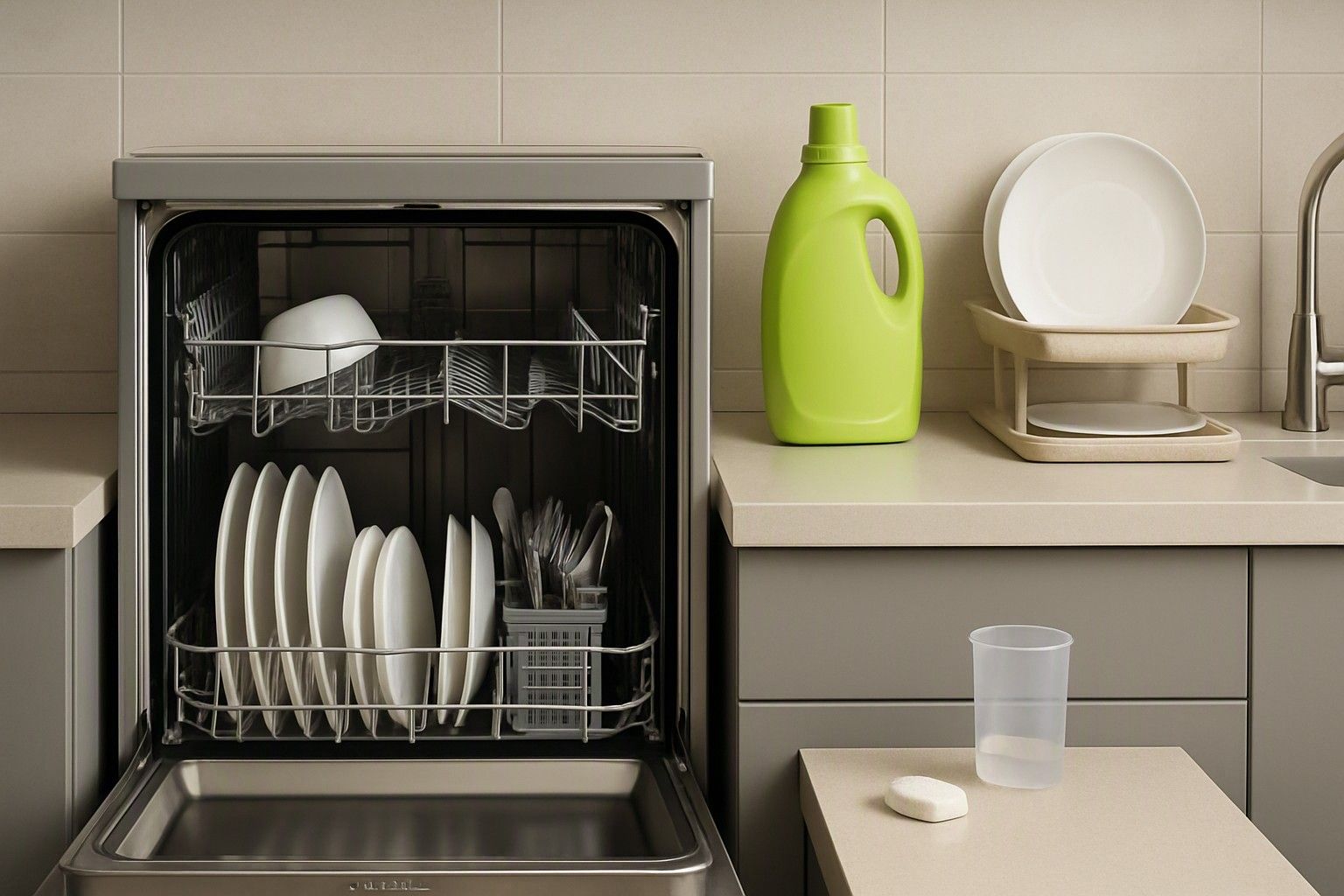
If this is your first dishwasher, the mistakes that hurt most are rarely about brand or looks. They are about water, space, heating, service and daily habits specific to Indian kitchens. This article walks through the six errors first-time owners regret most, so you can buy with confidence today and avoid the usual disappointments.
Trusting the Place-Setting Number Without Checking Rack Layout
A place-setting figure is a standardised count of plates, bowls and cutlery, and it assumes a neat western dinner table. An Indian household loads very differently: steel thalis, katoris, large kadhais, pressure cooker lids, tawas and tall tumblers. A machine that claims a generous capacity on paper can still struggle to fit a day's cooking vessels.
The layout of the racks decides how usable that number is. Look at whether the lower rack has enough height and width for a large plate or a wide pan, whether the tines fold down to make room for bigger vessels, and whether the upper rack or cutlery tray adjusts. Check where a thali would actually sit without blocking the spray arm.
Before buying, picture your own last cooking session and ask where each vessel would go. If you are unsure how to translate the number on the box, start with reading capacity beyond the place-setting figure, then match it to the size of your family and how many meals you cook daily. A rack that fits your real utensils matters more than a bigger headline number.
Ignoring Your Water Hardness
Hard water is common across many Indian cities, and it is the mistake that shows up slowly. For the first few weeks everything looks fine. Then glasses turn cloudy, steel develops white patches, and a chalky layer builds up on the interior and the heating element. Over time scale can shorten the life of internal parts and make cleaning less effective.
Most buyers never check their supply before ordering, and then blame the machine. Hardness depends on your area, your borewell or municipal source, and whether you already have a water purifier or softener upstream. Two flats in the same city can have very different water.
Built-in softening options and the salt or rinse aid they use exist for exactly this reason, but you need to know whether you need them before you pay for them. Spend a little time testing your supply for hardness first, ideally with a simple test kit or a report from your water supplier or purifier technician. The result tells you whether a model with a softener is worth it or whether a standard one will do, and it avoids a regretful purchase.
Skipping the Heater to Save Money
Some entry-level machines save cost by relying mainly on the incoming water temperature or offering limited heating. For Indian cooking, that is a risky place to economise. Oil, ghee, turmeric stains and dried dal do not come off reliably in lukewarm water, and greasy residue left on plates is the most common complaint from first-time owners.
A heater helps in two ways. It raises the water temperature so detergent dissolves and cuts through oil properly, and in many models it supports a hot-air or heated drying stage so dishes come out dry rather than damp and smelly. Without it, you may end up rinsing plates by hand beforehand, which defeats the purpose of buying a dishwasher.
Prices in this category run from ₹25,000 to ₹80,000, with an average of ₹42,000. If a machine is priced well below that range, check what has been cut. If your budget is tight, the ₹28,000 tier is a reasonable starting point, but confirm that heating and drying are included in the specification before you commit. A slightly higher spend on proper heating usually costs less than months of unsatisfactory washes.
Not Checking Service Coverage in Your City
A dishwasher is not a product you can simply carry to a shop if something goes wrong. It needs a proper installation with water inlet and drain connections, and it needs trained technicians for repairs, descaling and spare parts. Many buyers realise only after a fault that the nearest authorised technician is in another city, or that parts take weeks to arrive.
This matters more for dishwashers than for smaller appliances because the category is still newer in India and service networks are uneven, especially outside the major metros. Free installation on the invoice means little if nobody turns up to do it.
Before ordering, check three things for your own pin code: whether the brand lists an authorised service centre or technician for your area, whether installation is handled by the brand or by a third party, and how quickly previous owners in your city say repairs were done. Ask the seller directly about the warranty on the motor, pump and electronics, and what it excludes. Good service coverage is part of the price you pay, and it deserves the same attention as the specifications.
Using Regular Dishwashing Liquid in the Machine
This is the cheapest mistake to make and one of the messiest. The liquid you use at the sink is designed to foam, and a dishwasher is designed to avoid foam. A small amount of regular liquid can fill the cabinet with suds, reduce the cleaning action of the spray arms, cause overflow onto your kitchen floor and may trigger error codes or put stress on the pump.
Dishwashers need a detergent formulated for machine use, in powder, gel or tablet form. Many setups also use a rinse aid for spot-free drying, and a dishwasher salt if the machine has a water softener, especially useful where water is hard. These are small ongoing costs, and you should include them in your running budget along with electricity and water.
Check that the products you plan to use are easy to buy locally or online before you decide on a model. Tell everyone at home, including domestic help, that sink liquid never goes into the machine. A note stuck near the detergent compartment saves a lot of cleanup and avoids unnecessary service calls.
Not Measuring the Kitchen Space First
Plenty of first-time owners fall in love with a machine and only then discover it does not fit. Measure the width, depth and height of the space where it will go, then add room for the door to open fully and for you to load the lower rack without blocking a walkway. A door that hits a counter or a cabinet is a daily irritation.
The machine also needs support from the kitchen itself. Check that a water inlet tap is within reach, that a drain point is close enough for the hose, and that there is a properly earthed power socket nearby. In many Indian kitchens the sink and the plumbing sit in one corner, and that corner may decide where the dishwasher can go, regardless of how much free space exists elsewhere.
Also check the route to the kitchen. Measure doorways, lifts and corridors so the machine can be delivered and installed without being sent back. Ask the installer to visit before you pay, if possible. Taking measurements takes an hour and prevents a refund argument later.
A Final Pre-Purchase Checklist
If you have read this far, you already know the six things that trip up first-time owners. Run through them once more before you pay:
- Rack layout: Will your actual thalis, kadhais and tumblers fit, not just a standard place-setting count?
- Water hardness: Have you tested your supply and decided whether a softener is needed?
- Heating: Does the machine have a heater for washing and drying, so greasy dishes come out clean?
- Service: Is there an authorised technician for installation and repairs at your pin code?
- Detergent: Have you planned for machine detergent, rinse aid and salt rather than sink liquid?
- Space: Have you measured the kitchen, the door swing, the tap, the drain and the power socket?
On budget, prices run from ₹25,000 to ₹80,000, and the tiers sit at ₹28,000, ₹45,000 and ₹65,000. If your answers to the checklist are clear, you can choose within your tier and buy now, with no reason to put the decision off. For a wider view of features and sizing, see the broader checklist for choosing the right model.
The mistakes that first-time buyers regret come down to a few checks: how your vessels fit, what is in your water, whether the machine heats properly, who will service it, what goes into it, and where it will stand. Settle these six before you buy, and your first dishwasher is far more likely to feel like a relief than a regret.
Comments
Be the first to comment.