Dishwasher Maintenance in India: Salt, Rinse Aid, Detergent and Filter Care
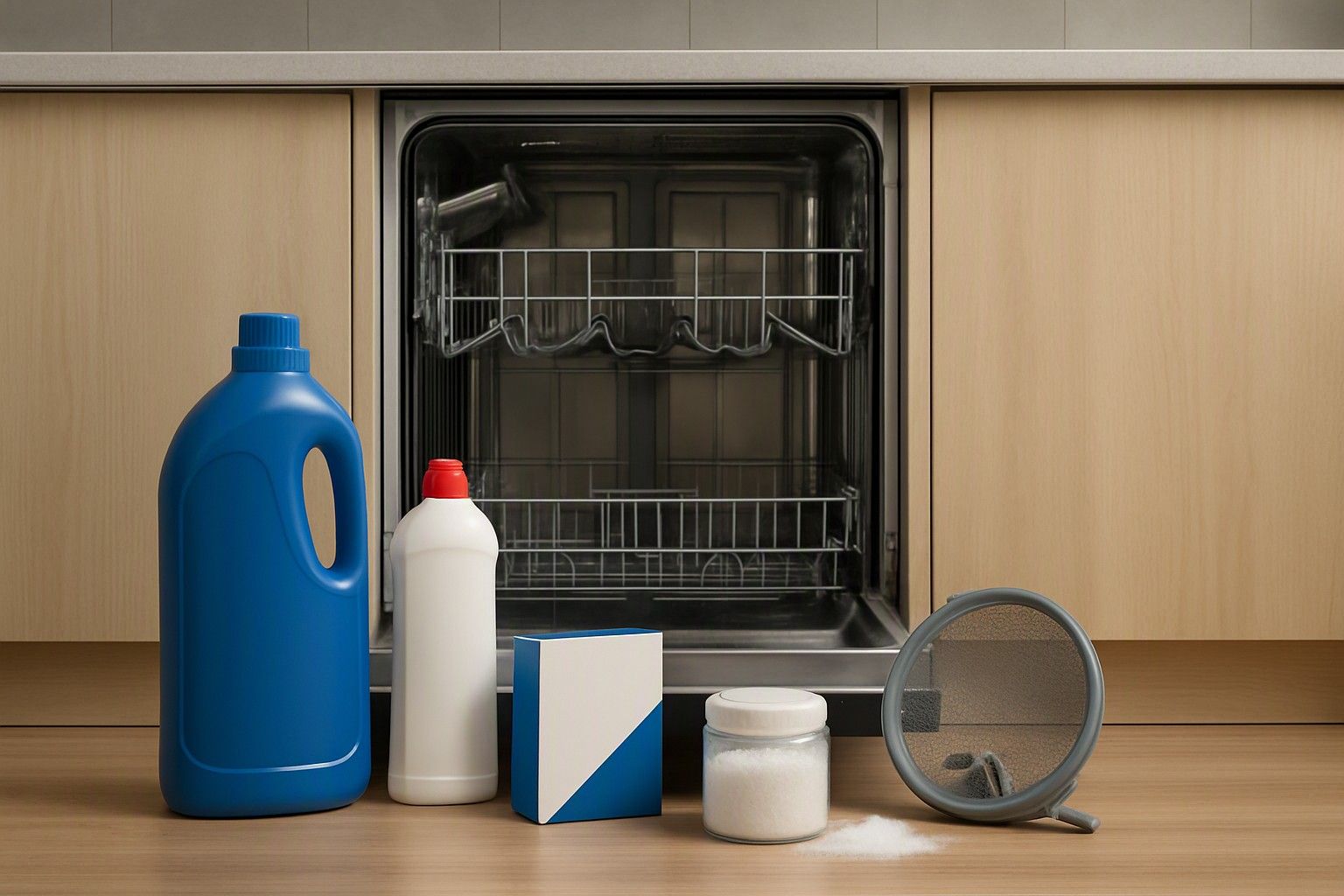
If you own a dishwasher in India, or are about to buy one, this article lists what you will keep buying and what you need to do to keep it running well: detergent, softener salt, rinse aid and a clean filter. The routine is light, but hard water, oily masala-heavy loads and humid monsoons make it matter more here than in the manuals written for other climates. Below you will find what to stock, how often to clean, and how to fix cloudy dishes or a stale smell without calling a technician.
Dishwasher Detergent: Powder, Gel and Tablets
Dishwasher detergent comes in three forms, and each suits a different household.
Powder is usually the cheapest per wash and lets you adjust the dose. The catch is that powder can clump in humid weather, and in hard water it may not dissolve fully, leaving a gritty film. Store it in an airtight container and scoop with a dry spoon.
Gel dissolves easily and rarely leaves grit, which suits lighter daily loads. It tends to struggle with baked-on, oily residue, so it can disappoint after heavy cooking.
Tablets are pre-measured, which removes guesswork, and many are all-in-one with a rinse aid component built in. They cost more per wash. In hard water, an all-in-one tablet still does not replace softener salt.
Whichever you choose, use only detergent made for dishwashers. Hand-wash dish liquid creates foam that can overflow and stress the pump. Overdosing is also a problem, because extra detergent does not clean better, it just leaves residue. Among the detergent errors many new owners make, wrong type and wrong dose are the most common, and both are easy to correct once you know them.
Softener Salt and Rinse Aid: When and How Much
Salt and rinse aid do different jobs, and confusing them is a frequent source of spotty dishes.
Softener salt does not go on your dishes. It regenerates the resin in the built-in water softener, which removes the minerals that cause scale and white film. Use salt sold for dishwashers, not table salt, which has additives that can clog the softener. Fill the salt reservoir until it is full using the funnel that comes with the machine. The first fill will push out some water, so run a short cycle afterwards so no salty residue sits in the tub. Refill when the salt indicator lights up, or check the reservoir if your model has no indicator. How quickly you use it depends on how hard your water is, which is why setting the softener to match your water is the first step.
Rinse aid helps water sheet off glasses and plates instead of beading, so you get fewer spots and better drying, especially on plastic containers. Fill the dispenser when the indicator shows low, and do not overfill. If glasses look streaky, the dose may be too high. If they spot, it may be too low. Adjust the dial one step at a time and test over a few washes.
Cleaning the Filter After Heavy Masala Loads
The filter is the one part that does most of the unseen work, and Indian cooking loads it quickly. Turmeric, oil, rice grains, curry leaves, whole spices and tea residue all end up there. A clogged filter leads to poor cleaning, cloudy glasses and bad smells, so check it more often than the manual's general advice if you cook oily gravies daily.
A practical rhythm is a quick look weekly and a proper clean after any heavy load, such as a festival cooking day or a pile of kadhai and tawa utensils.
- Pull out the lower rack and twist out the filter assembly, which usually has a coarse filter and a fine mesh.
- Remove visible food bits and rinse under running water.
- Scrub the mesh gently with a soft brush and a drop of regular dish liquid, then rinse well. Turmeric stains are cosmetic and do not harm anything.
- Check the sump area underneath for stray seeds or fragments, and clear the holes in the spray arms with a toothpick.
- Refit the filter fully locked, and never run the machine without it.
Scrape plates before loading, but there is no need to pre-rinse. Scraping keeps the filter clean without wasting water.
Preventing Smells in Humid Monsoon Months
A closed, damp tub is an ideal place for odour, and monsoon humidity makes it worse. Most smells come from three sources: food trapped in the filter, stagnant water in the drain path, and moisture on the door gasket.
Start with habits. After the cycle finishes, leave the door slightly ajar so the tub can air out. Do not leave dirty dishes inside for a day or two before running a wash, since food that sits in humidity turns sour fast. Wipe the rubber door seal and the detergent dispenser edges with a dry cloth once a week, because the folds trap water and develop black mould.
Then the monthly reset: clean the filter, and run an empty hot cycle with a cleaner made for dishwashers. Some owners use citric acid, which also helps against scale, but check your manual first, and never mix cleaning products. Avoid ordinary vinegar on rubber seals unless your manufacturer allows it.
Finally, check the drain hose for kinks or a blocked sink connection. If water stands in the tub after a cycle, the smell will return no matter how clean the filter is, and the drain needs attention.
Warranty, Extended Plans and Common Repairs
Start by reading what the standard warranty covers. It usually covers manufacturing defects, but often excludes consumables, damage from poor water quality, voltage surges and improper installation. Register the warranty at purchase and keep the invoice and installation report, because service centres ask for both.
Extended plans are worth considering when the machine is a significant spend. With prices running from ₹25,000 to ₹80,000 and an average near ₹42,000, a major repair out of warranty can be a real expense. Before buying one, confirm in writing which parts are covered (motor, drain pump, control board, inlet valve), whether labour and visits are included, and whether the brand has authorised service in your city. A plan with many exclusions adds little.
The repairs owners most often face are fairly predictable:
- A clogged drain pump or blocked drain hose, often from food or a filter left out.
- Inlet valve trouble from sediment or low water pressure.
- Worn door gaskets that leak or hold odour.
- Blocked spray arms that cause poor cleaning.
- Control board faults, which voltage fluctuations can aggravate. A good stabiliser or surge protection helps if your supply is unstable.
Most of the first four can be prevented through filter and spray arm care.
Fixing White Residue and Poor Cleaning Yourself
Cloudy or chalky dishes can look alarming, but the cause is usually one of a few fixable things. Run a fingertip over a glass first. If the white film wipes away, it is typically hard water scale or detergent residue. If the glass stays cloudy after wiping, it may be etching, which is permanent and comes from over-dosing detergent in very soft water or from repeated high-heat washing of delicate glass.
Work through this order:
- Check the salt reservoir and refill it if low.
- Confirm the softener level matches your water hardness.
- Refill rinse aid and adjust the dial.
- Reduce the detergent dose and use fresh product, since damp powder clumps and dissolves badly.
- Clean the filter and spray arms.
- Run an empty hot cycle with a descaling or dishwasher cleaner.
If plates come out dirty rather than cloudy, look at loading. Overloaded racks, large vessels blocking the spray arm, and bowls facing upward collect water and block the spray. Switch to a more intensive program for oily loads, since short eco cycles may not be enough for gravy-heavy utensils. If a thorough clean-up changes nothing, a service visit is justified, particularly to check the heating element and water inlet.
Planning for Long-Term Upkeep
Upkeep becomes easy when it is a short schedule rather than a rescue job.
- Weekly: look at the filter, wipe the door seal, leave the door ajar after the last cycle.
- Monthly: deep-clean the filter, clear the spray arm holes, and run an empty cleaning cycle.
- As needed: top up salt and rinse aid when the indicators call for it, and keep a spare pack of each so a run-out never stops you.
- Yearly: review warranty or plan status and have the drain and inlet checked if performance has slipped.
Your recurring costs are detergent, salt and rinse aid, plus an occasional machine cleaner. These are modest next to the cost of the appliance itself, so a good supplier or a monthly stock-up is more useful than hunting for the lowest price on every pack.
If you are still choosing a machine, read our guide on what to look for in a model that is easy to own. A filter you can remove without tools, clear salt and rinse aid indicators, and a service network in your city matter more over the years than extra programs that you rarely use.
You now know what you will keep buying: dishwasher detergent in the form that suits your water, softener salt, rinse aid, and an occasional machine cleaner. You also know the care that keeps things trouble-free: a clean filter, a dry door seal, and a quick check when dishes come out cloudy or smelly. Follow the simple schedule above and most problems never reach the stage of a service call.
Comments
Be the first to comment.