Can a Dishwasher Clean Indian Utensils? Kadai, Tawa, Pressure Cooker and More
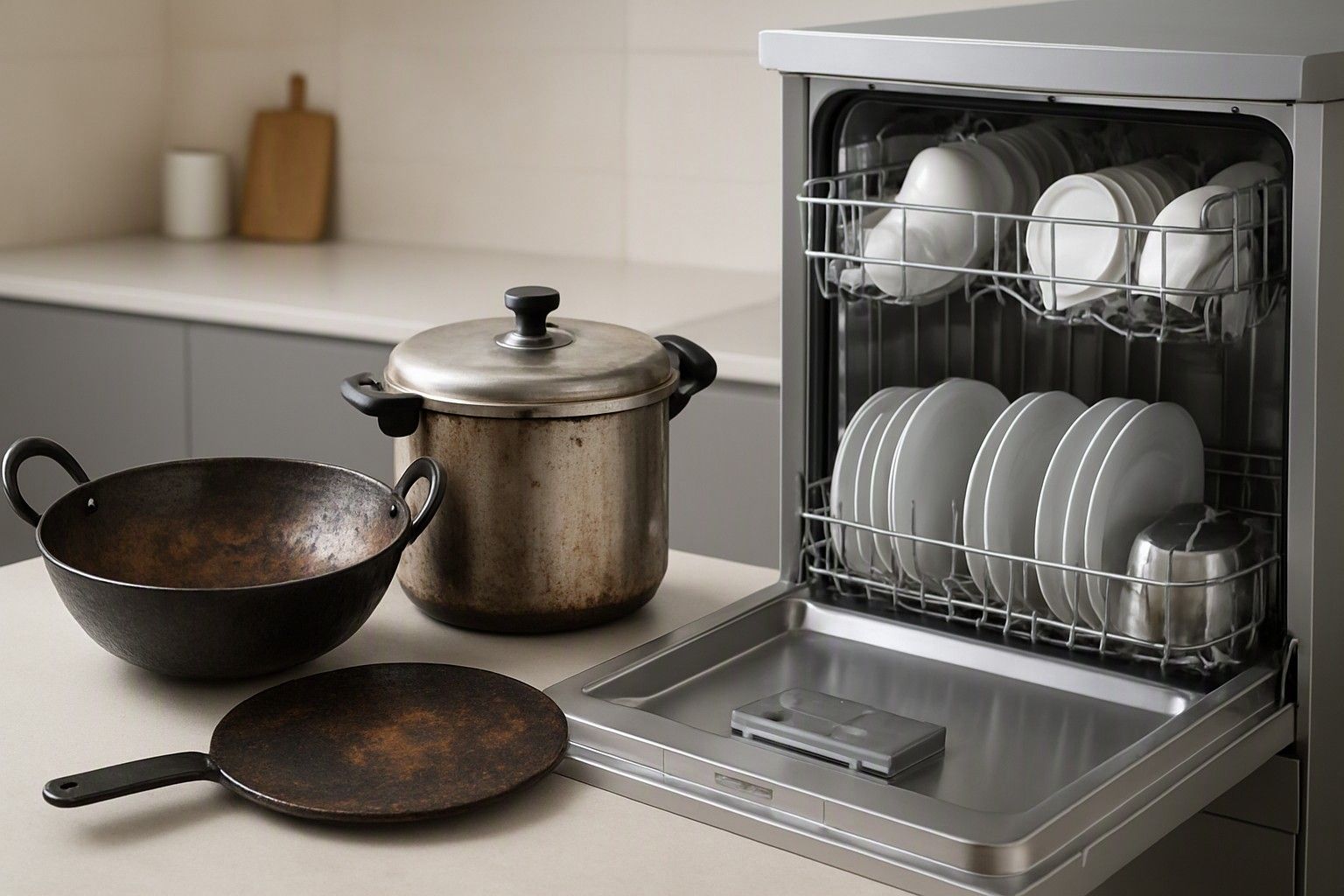
Yes, for most everyday steel cookware a dishwasher copes with oil, masala and even burnt milk residue, provided you scrape off solids first and keep a handful of utensils out of the machine. This article is for anyone who suspects a machine cannot handle a kadai, a pressure cooker or a week of tadka-heavy cooking. It tells you what comes out clean, what does not, and which vessels should stay at the sink.
How a Dishwasher Cleans: Spray Arms, Hot Water and Detergent
A dishwasher does not scrub. It sprays hot water mixed with detergent from rotating spray arms, and the detergent's job is to break down grease and loosen food so the water jets can carry it away. The same water is circulated through a filter, then drained, and the cycle repeats with fresh water for rinsing.
This matters for Indian cooking because the result depends on what the water can physically reach. A vessel stacked inside another, or a deep bowl facing upwards, will come out dirty however good the machine is. Loading utensils so the dirty surface faces the spray is the single biggest factor in a clean result.
The filter is the second thing to understand. Rice grains, dal skins, curry leaves and bits of onion get caught there, and a clogged filter sends food particles back onto clean steel. Rinsing it regularly takes a minute and keeps results consistent. Heat, detergent and spray coverage together do the work, so a missing piece in any one of them shows up as greasy or cloudy utensils.
Oil, Tadka and Turmeric Stains: What Comes Off and What Doesn't
Oil films, ghee, curry gravy and masala paste on steel, glass and ceramic usually come off well, because hot water and detergent are exactly what grease needs to be emulsified. Plates, katoris, steel bowls and the inside of most serving dishes are routine jobs for a machine.
Temperature is the deciding factor. Oil cools and sticks as a film when the water is not hot enough, and many homes have a cold or lukewarm inlet. That is why an inbuilt heater matters for greasy tadka residue: the machine heats the water itself instead of relying on what your tap supplies.
Some things will not fully come off. Turmeric stains on plastic containers and lids are the usual complaint, because plastic absorbs the pigment, and no wash cycle reverses that. Steel and glass do not hold the colour. Baked-on or charred residue, such as a layer of burnt masala at the base of a kadai, also needs soaking or a hand scrub first. Expect a dishwasher to remove fresh and normally dried grease, not to rescue cookware that has been left to harden for days.
Pressure Cookers, Kadais and Heavy Steel Vessels
Stainless steel and tri-ply cookers, kadais and pans are well suited to a dishwasher. The challenge is less about cleaning power and more about shape and size.
For a pressure cooker, take out the rubber gasket and the whistle or weight, and wash those separately. Check that the vent pipe under the lid is clear of dal or rice, because water jets may not clear a blocked vent. Place the cooker body upside down on the lower rack so water reaches the inside, and slot the lid at an angle so it does not block the spray.
Deep kadais and large pots are where loading gets tricky. Before starting a cycle, spin the spray arm by hand to confirm nothing blocks it. A kadai that stops the arm will leave every other utensil half-washed. This is where rack space for bulky cookers and large kadais becomes a real buying consideration, since a big family cooker may take up half a rack.
Aluminium cookers and hard-anodised pieces can darken or dull with strong detergent, so check the maker's care advice before including them.
Utensils That Should Never Go In: Cast Iron Tawa, Brass, Copper and Wooden Ladles
Some everyday Indian cookware does not belong in a dishwasher, and the damage is usually permanent.
- Cast iron tawa and kadai: Detergent and long hot cycles strip the seasoning, and the bare iron then rusts. Wipe, rinse and oil these by hand.
- Brass and copper vessels: They tarnish, spot and lose their shine in the machine. Tin-lined pieces can also be damaged, so wash them by hand with the usual tamarind or lemon methods.
- Wooden ladles, spatulas and rolling pins: Wood swells and cracks under heat and moisture, and glued handles can come loose.
- Non-stick tawas and pans: Harsh detergent and heat can wear the coating over time. Many makers advise hand washing, so follow what your cookware says.
- Sharp knives and thin aluminium pieces: Blades dull and thin aluminium can discolour.
If your kitchen leans heavily on cast iron and brass, expect to keep a hand-wash routine for those items alongside the machine. The dishwasher then takes the steel, glass and ceramic that make up most of the daily pile.
Scraping and Soaking Habits That Improve Results
A few habits separate a machine that disappoints from one that works well with Indian cooking.
Scrape, but do not pre-wash. Tip leftover gravy, rice and dal into the bin or sink, and wipe thick oil off with a used cloth or tissue. A full hand rinse is not needed, and detergent actually works better with some food soil present.
Soak burnt milk and starch. For a pan with scorched milk, caramelised sugar or dried rice starch, fill it with water and a little detergent for fifteen to thirty minutes. Once the burnt layer softens, the machine can finish the job. Loading a charred pan straight in rarely works.
Load the same day. Dal and masala harden when left overnight, and hardened residue is the hardest to remove. Stacking utensils in the machine after meals and running a cycle when full avoids this.
Use dishwasher detergent, and add salt and rinse aid if your water is hard. Hard water leaves a white film on steel, and ordinary dish soap creates too much foam for the machine. The right consumables matter as much as the loading.
Deciding If Your Cooking Style Suits a Dishwasher
A simple test: look at what you wash most days. If the pile is mainly stainless steel plates, katoris, glasses, cookers, kadais and ceramic or glass dishes, a dishwasher suits you, even with daily tadka and frying. If your regular cooking depends on cast iron, brass, copper and wooden tools, a good share of washing will stay manual, and the machine will cover a smaller part of the load.
Be honest about habits as well. The machine rewards scraping, loading with care and an occasional soak for burnt vessels. It does not reward leaving dirty pans for two days. Households that can manage those few steps usually find that oily utensils are the least of their worries.
On cost, dishwashers in this category typically run from ₹25,000 to ₹80,000, with an average of around ₹42,000. Knowing where your cookware and routine fit lets you decide with confidence now, rather than carry the question around. For what else Indian kitchens should weigh when picking one, the buying guide covers capacity, drying, water supply and installation.
A dishwasher can clear oil, masala and burnt milk from the steel vessels most Indian kitchens use daily, as long as you scrape first, soak scorched pans and load with the spray in mind. Cast iron, brass, copper, wood and non-stick stay at the sink. If your daily pile is mostly steel, glass and ceramic, the answer to your question is yes.

Comments
Be the first to comment.