Cleaning, Descaling and Replacement Wicks: What Owning a Humidifier Takes
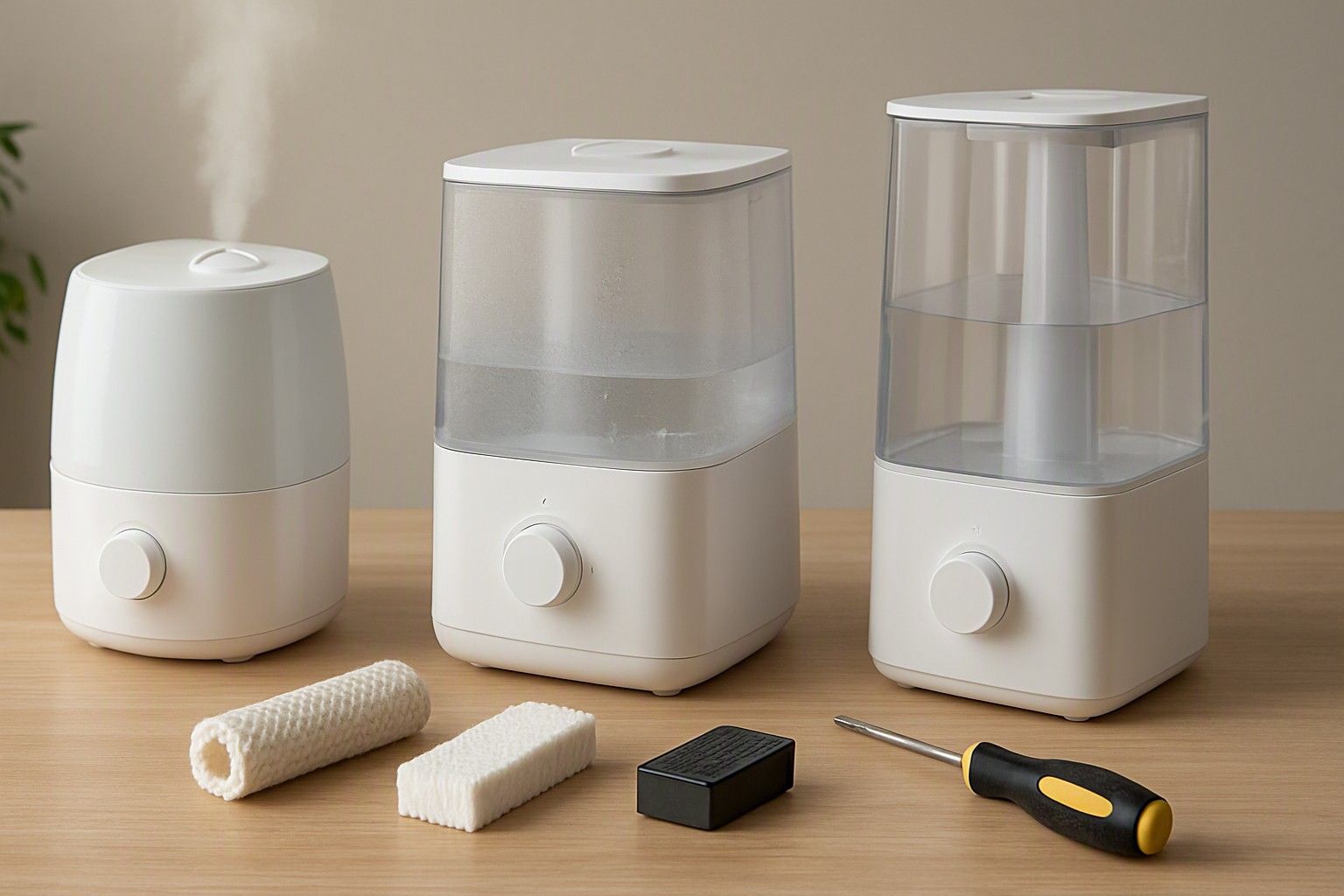
A humidifier needs a quick rinse every day, a proper scrub every week, descaling as often as your water demands, and consumables such as wicks or cartridges once a season or so. If you already own one, or are about to buy one and want to know what the next few winters will ask of you, this article lays out the routine, the recurring costs and the checks that matter. It covers the whole ownership cycle, from the first morning refill to packing the unit away.
Daily, Weekly and End-of-Season Cleaning Routine
Standing water is what makes a humidifier different from most home appliances, and it sets the routine. Stale water in the tank is where slime, odour and mould start, so the daily habit matters more than any deep clean.
Daily: Empty whatever water is left in the tank and base, rinse both, and refill with fresh water. Never top up yesterday's water. Wipe the outside if you notice dust, which is common in Indian homes with open windows and heavy road dust.
Weekly: Unplug the unit and take it apart as far as the manual allows. Scrub the tank and base with a soft brush and mild soap. Pay attention to corners, the float, the mist outlet and the area around the ultrasonic plate or heating element. Rinse until no soap smell is left. A weekly disinfecting step, using diluted white vinegar or a manufacturer-approved cleaner, keeps the film from building up.
End of season: Do a full descale and disinfect, replace any spent wick or cartridge, and dry every part completely before storing. If you run the unit for most of a long north-Indian winter, this last step is what decides whether it works properly next November.
If the weekly clean keeps getting skipped, that is a signal to choose a model with a wide tank opening and few small crevices.
Descaling With Vinegar or Citric Acid
Scale is the chalky crust that forms where water evaporates or gets heated. It coats heating elements, clogs ultrasonic plates and stiffens wicks, so the unit works harder and mists less. If your supply is borewell or tanker water, expect it sooner and more often; the page on why mineral-heavy water speeds up scale explains the cause and what it does to both the machine and your room.
With vinegar: Mix white vinegar with water in roughly equal parts, or follow the ratio in your manual. Fill the tank or base, or soak removable parts, for 20 to 30 minutes. Loosen the softened scale with a soft brush, then rinse several times until the vinegar smell is gone.
With citric acid: Dissolve a small spoonful of food-grade citric acid powder in a litre of warm water and use it the same way. It has less odour than vinegar, and the powder is easy to find in Indian kitchens and grocery shops.
A few cautions apply. Never mix vinegar or citric acid with bleach or any chlorine-based cleaner. Don't scrub an ultrasonic plate with anything hard, as a cotton swab is enough. Keep acid away from any part the manual says to avoid. Run a rinse cycle with plain water before using the unit again. Using filtered or low-mineral water in the tank stretches the gap between descales.
Replacing Wicks, Filters and Cartridges
Consumables are the part of ownership that varies most between types. Evaporative models use a wick or filter that soaks up water and releases it into the air. Some ultrasonic models use a demineralisation cartridge to cut white dust. Many warm-mist units use no consumable at all, only regular descaling.
Wicks and cartridges are usually replaced once a season, but hard water shortens that. Replace one sooner if it turns stiff, crusty, discoloured or smelly even after rinsing, or if mist output drops although the tank is clean. A wick that is left in place too long stops absorbing properly and can harbour growth.
To work out your yearly spend, multiply the replacement part's price by how many you will need in a winter, and check this before buying rather than after. Look for three things:
- Whether the replacement is sold separately and is easy to order in India.
- Whether it is a model-specific part, which leaves you dependent on one seller.
- Whether the maker states a replacement interval.
Across the range from ₹4,500 to ₹35,000, a cheaper unit can carry a surprisingly steady consumable bill, so compare the running cost with the purchase price. A unit near ₹12,000 with cheap, easy-to-find wicks can cost less to own than a lower-priced one with scarce parts.
Electricity Use by Type Across a Winter
Power draw depends mainly on how the unit produces moisture. Ultrasonic models vibrate a plate and use little electricity. Evaporative models run a fan through a wet wick, which draws somewhat more but still stays modest. Warm-mist and steam models heat water to boiling, and that heating element makes them the thirstiest of the three.
To estimate your own cost, find the rated wattage on the label, multiply it by the hours you run the unit each day and by the number of days in your winter, then divide by 1000 to get units (kWh). Multiply that by the per-unit rate on your electricity bill. Heated models often cycle on and off once the room reaches the set humidity, so actual use can be lower than the rated figure suggests, and a unit left running all night costs more than one used for a few hours in the evening.
A humidifier's electricity use is usually small next to a room heater's, but it is still worth knowing. If you run one all night for three or four months, the type you choose changes the total noticeably. For a bedroom used nightly, a low-wattage ultrasonic or evaporative unit keeps the running bill low, while a warm-mist model makes more sense if you value the heat or want to avoid the white dust that hard water can leave behind.
Storing the Unit After Winter Ends
Putting a humidifier away is where good routines often fall apart. By March most people are glad to be done and push the unit into a cupboard with water still sitting in the base. Months of closed, warm, humid air do the rest.
Before you pack it, run through the full end-of-season clean: drain everything, descale, disinfect, rinse and replace any worn wick or cartridge. Then let every part air-dry completely, in a ventilated spot out of direct sun if possible. Leave the tank cap off or loosely seated so no moisture is trapped. Wrap the cord loosely, and store the unit in its original box or a clean bag.
Store any spare wicks or cartridges dry and sealed, too. Take them out of the unit rather than leaving a damp one inside. The damp-storage mistakes that breed mould cover the most common errors in detail, and they are worth reading before you pack up. Also keep the manual and the bill with the unit, since you will need them if a warranty question comes up next season.
When winter returns, give it a short rinse and a quick descale before the first use. That takes ten minutes and avoids breathing in whatever grew over the summer.
Warranty and Service Points to Check
Warranty terms matter more for humidifiers than for many appliances, because the parts that fail are the ones exposed to water. Read the warranty card for what it actually covers, and look for these points:
- Duration and what counts: Check whether the warranty covers the whole unit or only the motor or main body. Ultrasonic plates, heating elements and wicks are often treated as consumables or wear parts, which means they may be excluded.
- Damage from scale: Some makers treat scale damage as misuse. If you have hard water, ask whether failure caused by mineral build-up is covered.
- Service reach: Check whether the brand has authorised service in your city or only collects units by courier. A humidifier needed in January is of little use if repair takes six weeks.
- Spare parts: Confirm that tanks, caps, wicks and cartridges can be bought separately, and for how long the maker commits to supplying them.
- Proof of purchase: Keep the invoice and warranty card together, and photograph the serial number.
A warranty can also be void if you use a cleaner or descaler the manual does not allow, so follow the cleaning instructions for your unit. If a seller cannot say clearly what the warranty excludes, treat that as a reason to look at other options.
Weighing Upkeep Before You Commit
Taken together, the upkeep is modest but real: a daily rinse, a weekly scrub, descaling at a pace your water sets, a consumable or two each season, some electricity, and a proper clean before storage. What decides whether that feels easy or tiresome is how well the model suits your habits and your water.
Before buying, it helps to ask a few plain questions. Can you reach inside the tank to clean it? Are the replacement parts available and priced reasonably? Is your water hard enough that a cartridge-based or warm-mist design suits you better? Will you run it all night, where electricity use adds up? If you would honestly skip weekly cleaning, choose the simplest, widest-opening design you can find.
This cost logic applies at every price level. A unit in the ₹5,000 bracket, one in ₹10,000 and one in ₹22,000 will all need the same basic care, and the difference lies in how easy that care is and what the consumables cost. To factor ongoing maintenance into which model you pick, use the buying guide alongside the questions above, and you can decide today with the full cost of ownership in view.
You now have the answer to what owning a humidifier takes: a daily rinse, a weekly scrub, descaling when your water demands it, wicks or cartridges once a season or when they turn stiff, and a thorough dry-out before storage. Add a quick electricity estimate and a look at the warranty and parts availability, and you can see the yearly cost clearly before you commit.
Comments
Be the first to comment.