Humidifier Mistakes That Lead to Mould, Damp Walls and Breathing Trouble
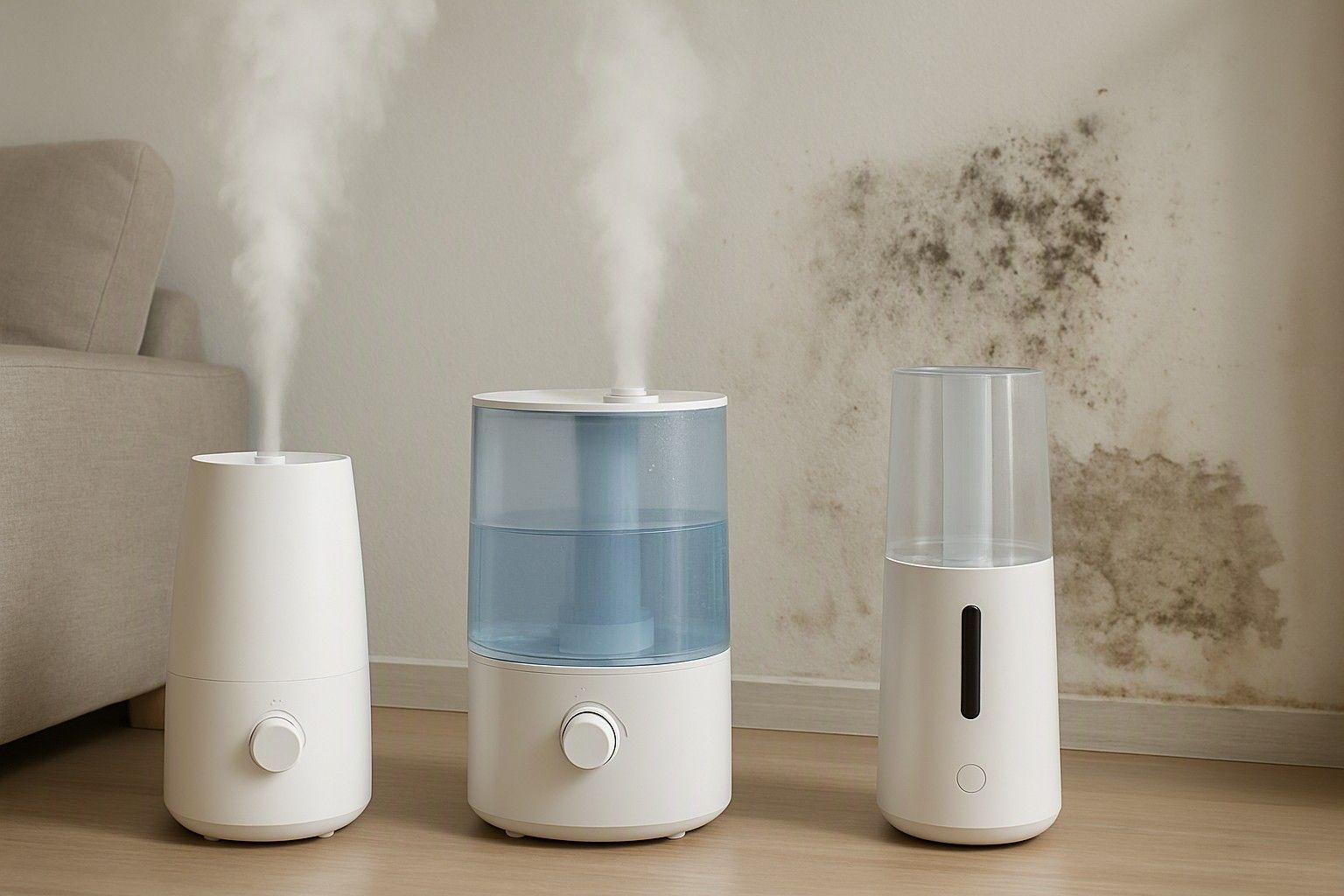
Yes, a humidifier can cause mould, damp patches and allergy flare-ups, but almost always because of how it is used, not because the machine is faulty. If you are about to buy one, or already own one and have noticed a musty smell or a sticky feel in the room, this article is for you. Below are the specific mistakes that cause the trouble in Indian homes, and how to avoid each one.
Running the Room Past 60% Humidity
Most of the damage starts here. A humidifier keeps adding moisture until you switch it off or it runs out of water, and it has no idea what the room already holds. Once indoor relative humidity stays above roughly 60%, moisture condenses on cool surfaces such as outer walls, window frames and the back of cupboards. Mould spores settle on those damp spots and start to grow. Dust mites, a common trigger for sneezing and night-time coughs, also multiply faster in damp air.
The comfortable zone for most people is somewhere in the 40–60% range. Below it, skin and throat feel dry. Above it, the room starts working against you. Because you cannot feel a few percentage points of difference, guessing is the real mistake. A small standalone hygrometer costs very little compared with repainting a damp wall, and it tells you straight away whether the humidifier is helping or overshooting.
A common pattern is running the machine all night on a high mist setting in a closed bedroom. By morning the air feels pleasant, but the window glass is wet and the room has crossed 65% or more. If you see condensation on glass or walls, the humidifier is set too high or is running for too long.
Why Monsoon and Coastal Months Are the Wrong Time to Run One
Indian weather often makes a humidifier unnecessary. During the monsoon, outdoor humidity in much of the country sits well above 70%, and in coastal cities like Mumbai, Chennai and Kochi it can stay high for most of the year. Adding more moisture to air that is already close to saturated is how wardrobes end up smelling of mildew and paint begins to bubble.
The tool earns its place in genuinely dry conditions: North Indian winters, dry-season heat in inland cities, and rooms where an air conditioner or heater strips moisture out of the air. An AC room can feel dry even in a humid city, which tempts people to run a humidifier in July. Check a hygrometer before you do. The AC dries the air where you sit, but the walls, curtains and furniture in the room may still be damp.
A useful rule is to treat the humidifier as a seasonal or situational tool rather than a daily appliance. If the hygrometer already reads above 55–60% with the machine off, leave it off. Some buyers in humid regions will use one only on a few dry, air-conditioned nights, and that is a perfectly sensible way to own one.
Placement Mistakes: Near Walls, Wardrobes and Electronics
Where you put the humidifier decides which surfaces get wet. The mist or vapour leaves the nozzle in a concentrated plume, and anything sitting in that plume absorbs moisture first. Pushed against a wall, the machine soaks one patch of paint, which then peels or grows dark spots. Placed beside a wardrobe, it dampens clothes and wooden panels, and the closed space gives mould an ideal home.
Keep it on a flat, stable, water-resistant surface at about waist or table height, with open space around it, roughly a metre in every direction. Do not place it on a bed, a carpet or a wooden shelf, where drips and fallout from the mist collect and stay wet. A tray under the unit helps catch spills.
Keep it away from TVs, laptops, routers, speakers and charging points. Moisture on ports and vents causes corrosion over time and can create a safety risk near sockets. Books, curtains, upholstered sofas and soft toys also soak up humidity and hold on to it. If the room is small, point the mist toward the open centre of the room, not toward any furniture.
Adding Essential Oils or Balms to the Tank
It is tempting to add a few drops of eucalyptus oil or a spoon of a cold balm to the water, especially when someone at home has a blocked nose. In most humidifiers this is a mistake. Oils do not mix with water. They coat the inside of the tank and the mist chamber, and many plastics crack or turn cloudy when oils sit on them. Residue can also clog the part that produces the mist, which shortens the machine's life.
The bigger concern is breathing. Oils turned into fine droplets reach the airways directly. For people with asthma, allergic rhinitis or sensitive lungs, that can trigger coughing or tightness instead of relieving it. Small children and pets are even more sensitive. An oily film inside a warm, wet tank also gives bacteria and mould something to feed on.
If you want fragrance or a menthol effect, check what the manufacturer's manual allows. Some models have a separate aroma tray built for this, and that is a different design from dropping oil into the main water tank. If the manual says water only, treat that as a firm rule. Plain clean water gives you the humidity benefit without the risks.
Shopping Red Flags: No Humidity Control, Hard-to-Clean Tanks
Some of these problems are built into the machine you buy. The first red flag is a model with only a mist-level knob and no way to sense or limit room humidity. It will keep running until the water is gone, which makes overshooting 60% easy in a small room. Look for humidistat controls that stop the room overshooting, such as a target humidity setting or an automatic shut-off, and pair the machine with a separate hygrometer if the built-in display looks unreliable.
The second red flag is a tank that is hard to clean. A narrow opening that your hand cannot reach into, tight corners, or a tank that cannot be detached and carried to the sink all lead to skipped cleaning and slimy buildup. Prefer a wide mouth, a smooth interior and parts that come apart without tools.
Also be wary of listings that promise "no cleaning needed" or hide what the filter, cartridge or wick costs to replace. Even models in the ₹10,000 range can have good humidity control, so a higher price does not guarantee safe use. What matters is whether the model controls humidity and makes cleaning easy. Prices run from ₹4,500 to ₹35,000, so you can usually find these two features without paying for extras you will not use.
Leaving Stagnant Water in the Tank Between Uses
Water left sitting in a warm tank for a day or two turns into a breeding ground for bacteria and mould. When you switch the machine on again, it sprays whatever has grown in there into the air you breathe. This is the mistake that most directly links a humidifier to coughs, throat irritation and allergy flare-ups. A pink or black film inside the tank, or a sour smell when the mist starts, means it has already happened.
The habit that prevents it is simple. After each use, empty the tank completely, wipe the inside, and let it dry with the cap off before storing. Fill it with fresh water each time you run it, and never top up old water. If your tap water is hard, as it is in many Indian cities, white mineral dust can settle on furniture and scale can build up inside, so using filtered or demineralised water helps. Stubborn scale or film also needs a proper cleaning routine on top of daily emptying.
If you go away for a few days, or put the machine away for the season, make sure every part is dry before it goes into a box. Our guide on draining and drying habits between uses covers the routine and the running costs in more detail.
Choosing a Model That Makes These Mistakes Harder
Good habits matter, but the right machine makes them much easier to keep. Start with what the earlier sections point to. You want humidity control that holds the room within range, a tank that is easy to detach, fill, empty and dry, and an automatic shut-off so the machine stops when the water runs out. A tank size that matches your room also helps, because a tank that is too large for a small bedroom runs for hours and pushes humidity up.
Then think about your climate. If you live somewhere humid for most of the year, a humidifier may only be a short-season tool, and spending on a feature-heavy model may not be worth it. If you live somewhere with dry winters or use an AC all day, you will run it more often, and humidity control and easy cleaning are worth paying for. With prices typically running from ₹4,500 up to ₹35,000 and an average around ₹12,000, you can decide today based on features rather than price alone.
If you are still comparing options, our guide to a model that suits your room and climate in the first place walks through room size, mist type and running costs, so you can choose once and avoid the problems covered here.
A humidifier causes mould and breathing trouble when it pushes the room past 60%, runs through the monsoon, sits too close to walls and wardrobes, gets oils in the tank, or holds old water between uses. Keep humidity in the 40–60% range with a hygrometer, place the machine in open space, use only water, and empty and dry the tank after every use. Choose a model that controls humidity and is easy to clean, and it will help your room instead of harming it.
Comments
Be the first to comment.