Ultrasonic vs Evaporative vs Warm-Mist Humidifiers: How Each Works and Who It Suits
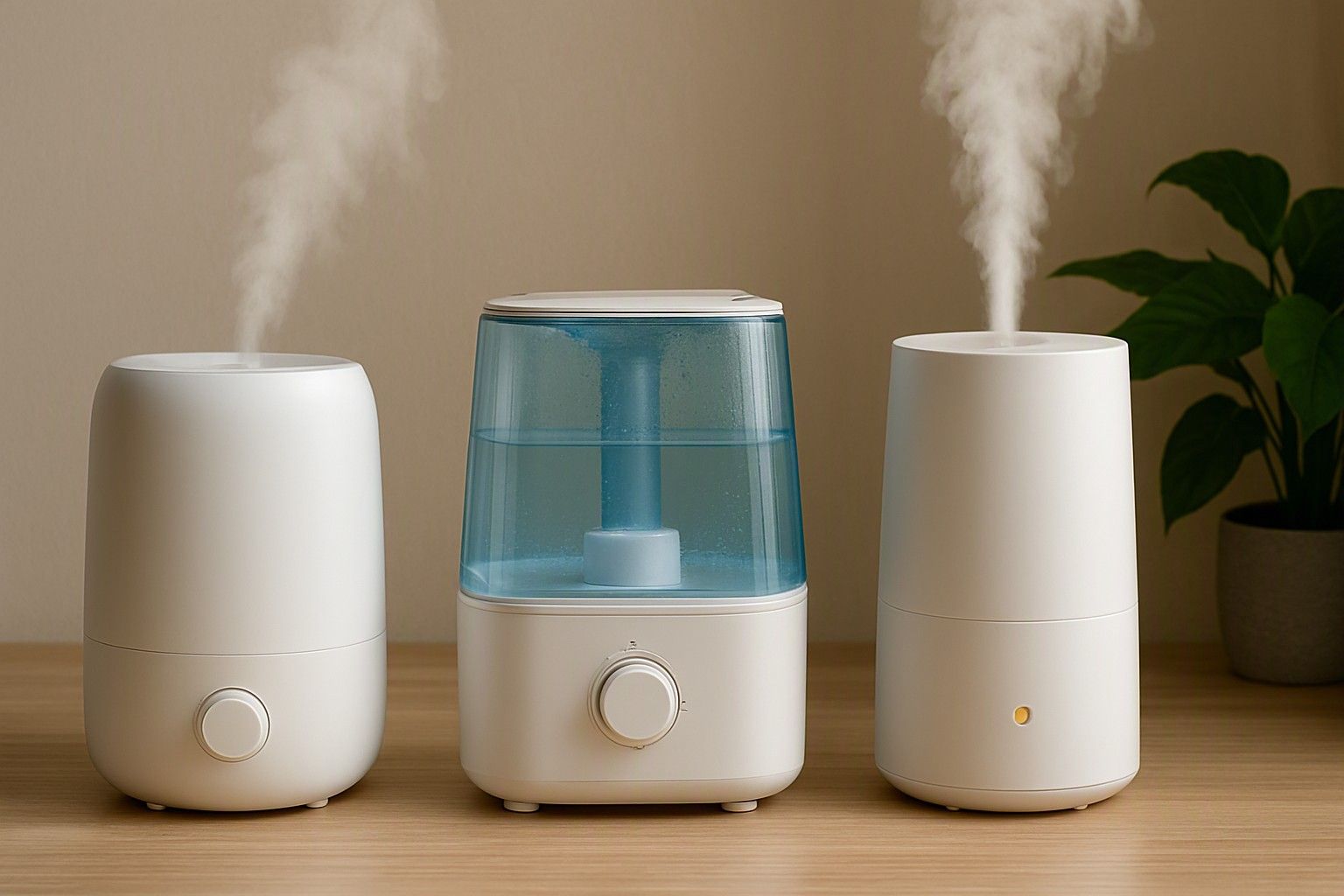
If you are stuck choosing between ultrasonic, evaporative and warm-mist humidifiers, this page is for you. The mist technology decides how loud the unit is, how much power it draws, whether your tap or borewell water leaves white dust, and what upkeep you sign up for. Read on to match one mechanism to your water, your room and your routine.
How Ultrasonic Humidifiers Make Mist
An ultrasonic humidifier has a small metal disc, called a transducer, that vibrates thousands of times a second while sitting under the water in the tank. The vibration breaks the water into extremely fine droplets, and a small fan pushes that cool mist out through a nozzle. There is no heating and no wick, which is why these units are compact and usually draw very little power.
The same simplicity creates the main catch. Whatever is dissolved in the tank water leaves with the droplets. With soft or demineralised water that is harmless. With the hard, high-TDS water common across many Indian cities, the minerals settle as a fine white film on furniture, floors and electronics.
Ultrasonic models also have no built-in limit on humidity. They keep misting until the tank is empty or you switch them off, unless they have a humidistat. In a small closed bedroom, that can push moisture higher than is comfortable, so a unit with a humidity sensor or timer is worth looking for.
How Evaporative (Wick) Models Self-Limit Humidity
Evaporative humidifiers work the way wet laundry dries. A fan pulls room air through a wet wick or filter belt, and the air picks up moisture as it passes. Nothing is vibrated or boiled, so only water vapour leaves the unit. Minerals stay behind in the wick.
The self-limiting behaviour comes from physics. The drier the air, the faster water evaporates from the wick. As the room approaches saturation, evaporation slows on its own, so the unit adds less moisture without any electronics deciding to. That makes over-humidifying much less likely, which suits closed rooms, children's rooms and anyone who tends to forget to switch the unit off.
The trade-offs are real. Output rises and falls with room dryness, so these units can feel slower to lift humidity on a very dry day. The fan also runs continuously, which is where the noise and electricity cost come from. And the wick needs periodic washing and eventual replacement, particularly where the water is hard.
Warm-Mist Units: Boiling Water and Higher Power Draw
Warm-mist humidifiers, sometimes called steam vaporisers, use a heating element to bring the tank water to a boil. The steam is released into the room, usually after cooling slightly in the outlet. Because the water is boiled, the mineral content stays behind in the heating chamber instead of travelling into the air, so you do not get white dust. Boiling also reduces what the water carries into the mist, though it does not excuse a dirty tank.
The cost is energy. Heating water takes far more power than vibrating a disc or spinning a small fan, so a warm-mist unit will be the most expensive of the three to run for long hours. Over a winter of overnight use, that shows up on the electricity bill.
Safety matters too. The water inside is hot, and a knocked-over unit can scald. Homes with toddlers or pets should place it out of reach or consider another type. Mineral scale also builds up on the heating element and needs regular descaling. The upside is that many people find warm mist soothing in cold, dry weather.
Noise Levels for Bedrooms and Study Rooms
Ultrasonic models are generally the quietest. With no fan-driven wick or boiling, the sound is a faint hum, sometimes with a slight gurgle as the tank refills the chamber. That makes them the natural pick for light sleepers and for study rooms where steady background noise is a distraction.
Evaporative units are different because the fan is part of the mechanism. On low speed, a well-made unit produces a soft, steady airflow sound that many people use as white noise. On higher speeds it becomes more noticeable. If the room is small, the low setting is usually enough, so fan speed range matters more than the headline claim.
Warm-mist units produce intermittent sounds: bubbling or simmering as the water heats, and the occasional click when the thermostat cycles. Those sounds are not loud, but they are irregular, and irregular noise is harder to ignore at night than a constant hum.
For a bedroom, ultrasonic is quietest and evaporative on low is a close second. For a study room you can run all day, the constant fan of an evaporative unit is easy to tune out, while the bubbling of warm mist may not be.
Which Type Copes With Hard Water
Hard water is where the three mechanisms differ most, and in much of India it should weigh heavily in your decision.
Evaporative: the most forgiving. Minerals stay in the wick, which slowly stiffens and discolours. You pay in wick replacements, but nothing ends up on your furniture.
Warm mist: also dust-free, because steam carries no minerals. The minerals form scale on the heating element and the chamber floor, so the work is descaling rather than dusting.
Ultrasonic: the most sensitive. Dissolved minerals leave with the droplets and settle as white powder. Some models include a demineralisation cartridge that captures part of the minerals, and you can also fill the tank with RO or distilled water. Both reduce dust but add a running cost and a task to remember. If your supply is borewell or tanker water, read why ultrasonic models leave white dust with high-TDS water before choosing this type.
The practical rule: if you cannot or will not use treated water for the tank, lean towards evaporative or warm mist. If you already have an RO unit running at home, an ultrasonic humidifier becomes much easier to live with.
Ongoing Costs by Type: Wicks, Cartridges and Electricity
The sticker price is only part of what a humidifier costs. Prices across the category run from ₹4,500 to ₹35,000, with an average around ₹12,000, but the three mechanisms spend your money in different places afterwards.
Ultrasonic: the lowest electricity use of the three. Costs come from demineralisation cartridges, if the model uses them, and from buying RO or distilled water if your tap water is hard. In soft-water homes, running costs can be close to nothing.
Evaporative: moderate electricity because of the fan, plus wicks that wear out and need replacing. How often depends on your water hardness and how many hours you run the unit.
Warm mist: usually no wicks or cartridges to buy, but the highest electricity use, since it boils water every time it runs. Add occasional descaling supplies, which are cheap, and the risk of wearing out the heating element sooner in hard-water homes.
For a clearer view of consumable costs, see our breakdown of replacement wicks and demineralisation cartridges. The budget tiers (₹5,000, ₹10,000 and ₹22,000) show purchase price only, so factor in these running costs when comparing a cheaper unit with a pricier one.
Narrowing It Down for Your Home
Start with your water. If it is hard and you have no RO or distilled supply for the tank, evaporative is the safest choice, with warm mist as the alternative if you accept higher power use and descaling. If your water is soft or treated, ultrasonic opens up and gives you the quietest, cheapest-to-run option.
Next, think about who sleeps in the room. For a light sleeper's bedroom, ultrasonic or evaporative on a low setting suits best. For a home with toddlers or pets, avoid the hot water of warm mist, and prefer a type that cannot over-humidify, which points to evaporative.
Then consider how many hours it will run. A unit left on all day or all night rewards low electricity use, which favours ultrasonic and evaporative over warm mist. For occasional use in a cold-weather room, warm mist's higher power draw matters less.
This gives you a mechanism shortlist. From there, line up mechanism, room size and budget together in the main buying guide, since a unit that is the right type but too small or large for the room will disappoint. Price should be the last filter, not the first, and you can decide at your current budget tier without waiting for anything to change.
The choice comes down to three questions: how hard your water is, how quiet the room needs to be, and how many hours the unit will run. Hard water points to evaporative or warm mist, a light sleeper points to ultrasonic or low-speed evaporative, and long running hours point away from warm mist. Answer those three and you know which mechanism to shop for.

Comments
Be the first to comment.