How Much Should a Humidifier Cost in India? Judging a Fair Price by Type and Features
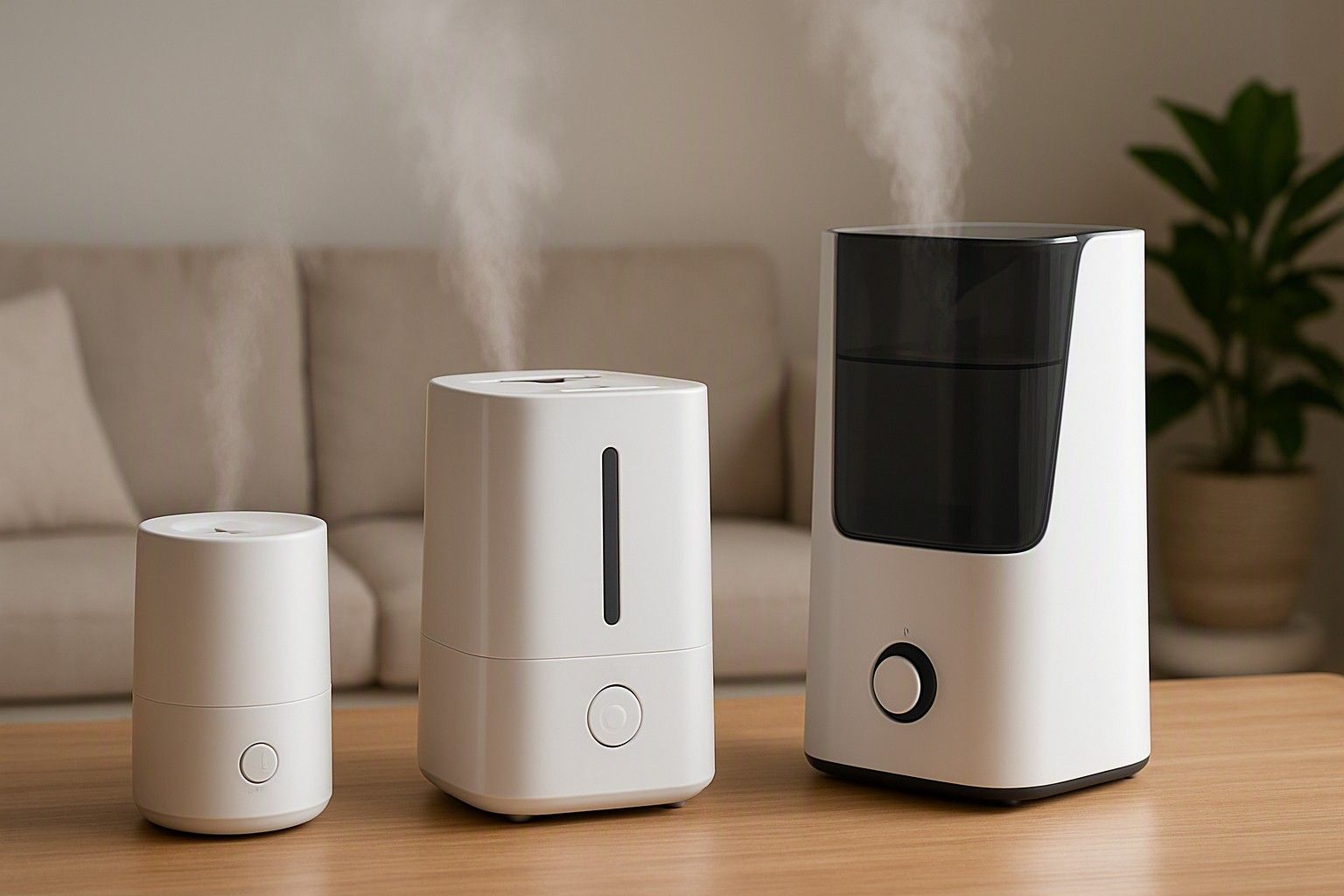
If you have a humidifier open in a tab and want to know whether its price is fair, this article is for you. Listings in India run from ₹4,500 to ₹35,000, and the number on its own tells you very little. What matters is what that number buys in type, tank size, controls and running cost, and the sections below show you how to read it.
Why Prices Span ₹4,500 to ₹35,000
A spread this wide comes from a handful of real differences, not just branding.
Type. Ultrasonic cool-mist units are the most common and usually the cheapest to buy. Evaporative models, which pull air through a wetted wick, tend to cost more but cope better with hard water. Warm-mist or steam units add a heating element, which affects both price and electricity use.
Capacity and coverage. A small tank suits a single bedroom. Larger tanks and stronger output, meant for big living rooms, cost more and need less frequent refilling.
Control. A basic unit has a dial and nothing else. Pricier ones add a built-in hygrometer that reads room humidity and adjusts output by itself, plus timers and auto-shutoff when the tank runs dry.
Build and upkeep. Better materials, quieter operation and easier-to-clean tanks all push prices up. So do demineralising cartridges, which matter in Indian cities with hard tap water because they reduce the white dust ultrasonic units can leave on furniture.
The price is fair when it matches the combination you actually need, not the longest feature list.
Price Band ₹5,000: What to Expect
Humidifier prices here start at ₹4,500, the entry point of the category, and stop short of the next band. Almost everything in this band is a compact ultrasonic cool-mist unit with a modest tank, built for one small bedroom or a study.
Expect manual controls, typically a mist-level knob and an on/off switch. You will usually not get a humidity display or automatic humidity control, so you judge the room by feel or with a separate hygrometer. Auto-shutoff when the water runs out is common but not guaranteed, so check the listing rather than assume. Plastic construction is the norm, and noise levels vary a lot between units.
This band is a sensible fit if you need relief in one small room, run the unit for a few hours a night and are happy to refill it daily. It is a weaker fit for larger rooms or long continuous use, because a small tank and limited output can leave you refilling constantly without moving humidity much.
A price in this band is fair if the unit has a clean, easy-to-open tank and a stated shutoff feature. If the listing hides basic details, that tells you something too.
Price Band ₹10,000: What Changes
Moving into this band, the biggest changes are practical, not cosmetic. Tanks get larger, so a bedroom can run through the night without a refill. Output is stronger, which means the unit can actually influence a medium-sized room rather than just the air around it.
Controls also improve. Many units here add a humidity readout, a timer, multiple mist settings and sometimes a remote. Auto-shutoff becomes closer to standard. Noise is usually better managed, which matters if the unit sits beside a bed.
You will still mostly find ultrasonic designs, though some evaporative options start to appear. Build quality is generally sturdier, with tanks that are easier to carry, fill and clean.
For most Indian households with one or two bedrooms, this band is where the gap between price and usefulness is narrowest. The extra spend over the lower band buys convenience and fewer daily chores. If you are weighing a listing here against one in the lower band, ask whether you would use the larger tank and the added controls. If so, the premium is earning its place.
Price Band ₹22,000: What the Extra Money Buys
This is the widest band, and what you get for the money is different in kind, not just degree.
The first gain is coverage. Larger tanks and stronger output suit big living rooms, open-plan spaces or homes where one unit has to serve a lot of air. The second is automation: a built-in hygrometer that holds humidity near a target and eases off by itself, so you are not adjusting it all day.
The third is water handling. Evaporative and hybrid designs, and units with demineralising cartridges, deal better with hard water, which cuts the white residue and can make the air feel cleaner. Warm-mist options also sit here for buyers who prefer them in cold weather. Quieter motors, better materials and more thoughtful tank design are also typical. Water quality also matters a lot, RO Filter water is typcally better than tap water.
Above this band, prices climb towards ₹35,000. That end adds large-capacity builds, app connectivity and design polish. Pay for these only if you will use them. The extra spend in this band is justified when you have a big space, need hands-off control, or live somewhere with very hard water. For a single small room, it is more than you need.
Using the ₹12,000 Category Average as a Reference Point
The category average of ₹12,000 is useful as a rough marker, not a target. It sits just inside the third band, pulled upward by premium units at the high end, which is why most buyers end up spending less than the average.
Use it as a sanity check. A listing well above ₹12,000 needs a clear reason, such as large capacity, automatic humidity control or a water-handling system suited to hard water. A listing well below it is not automatically a bargain or a warning. It is simply likely to be a smaller, simpler unit, so check that its size matches your room.
A listing close to ₹12,000 should come with solid basics: a sensible tank, a humidity display, auto-shutoff and a tank that is easy to clean. If those are missing at this price, you are paying a typical price for a below-typical unit.
So compare the price to the average, then compare what you get to what units at that price normally offer. If the specs line up, you can buy with confidence at the price shown.
Hidden Costs: Cartridges, Wicks and Power Draw
The sticker price is only part of what a humidifier costs you. Many units need replaceable parts: demineralising cartridges in some ultrasonic models, and wicks or filters in evaporative ones. Those parts recur, and over a few seasons they can make a cheaper unit cost more than a pricier one with lower upkeep. The consumable costs that sit on top of the sticker price are worth checking before you commit, especially how often parts need replacing and whether they are easy to find.
Water is the second factor. In hard-water areas, a unit without any mineral control will leave residue and need more frequent descaling. That means more of your time, and possibly cleaning products.
Power draw is the third. Ultrasonic units use little electricity. Warm-mist and steam designs draw more because they heat water, and running them for long hours adds up on the bill. Evaporative units use a fan, which sits between the two.
When comparing two listings, ask which one costs less across a full season, not only on day one.
Signs a Price Is Inflated for the Specs
Some prices run ahead of what the unit actually delivers. A few patterns are worth watching for.
The first is a small tank at a mid-band price, where you are paying for styling or app features on a unit that will still need constant refilling. The second is a missing humidity readout or auto-shutoff on a listing priced like a unit with them. Basic safety and control should not be a premium extra at mid-range prices.
The third is vague claims. If a listing talks about coverage or output without saying what room size it suits, or leans on words like smart or advanced without describing what they do, treat the price with caution. The fourth is a cartridge or filter that is hard to source or expensive to replace, which quietly raises the real cost.
A useful test is to strip the listing down to what you will use every day: tank size, control, shutoff, water handling and ease of cleaning. Then see which features justify a premium and which are padding. If the price still looks fair after that, it probably is.
Checking Price Against Everything Else That Matters
Price is one input, and it works best as the last check, not the first. A fair price on the wrong type or size is still a poor purchase. A unit that is too small for your room will run flat out and still fall short. One that is too large wastes money and can over-humidify a small space.
So start with the room: its size, how closed it stays, and how much you plan to run the unit. Then think about your water. Hard tap water points you towards evaporative designs or demineralising cartridges, while softer water gives ultrasonic units an easier time. Then ask how much attention you are willing to give, since automatic humidity control saves effort while a manual unit costs less up front.
Once those answers narrow the field, the price bands above tell you whether a particular listing is reasonable. To set the price beside type, size and water needs, the buying guide walks through each of those choices in order, so the number you see sits against a full picture rather than standing alone.
A fair humidifier price is one that matches your room size, your water and the controls you will actually use, with upkeep costs that do not catch you out later. Check the listing against its price band, compare it to the ₹12,000 average, and look for the inflation signs above. If it holds up on those, you can buy at the price shown without second-guessing it.

Comments
Be the first to comment.