Room Humidifier or Steam Vaporizer: Which Do You Need for Colds and Congestion?
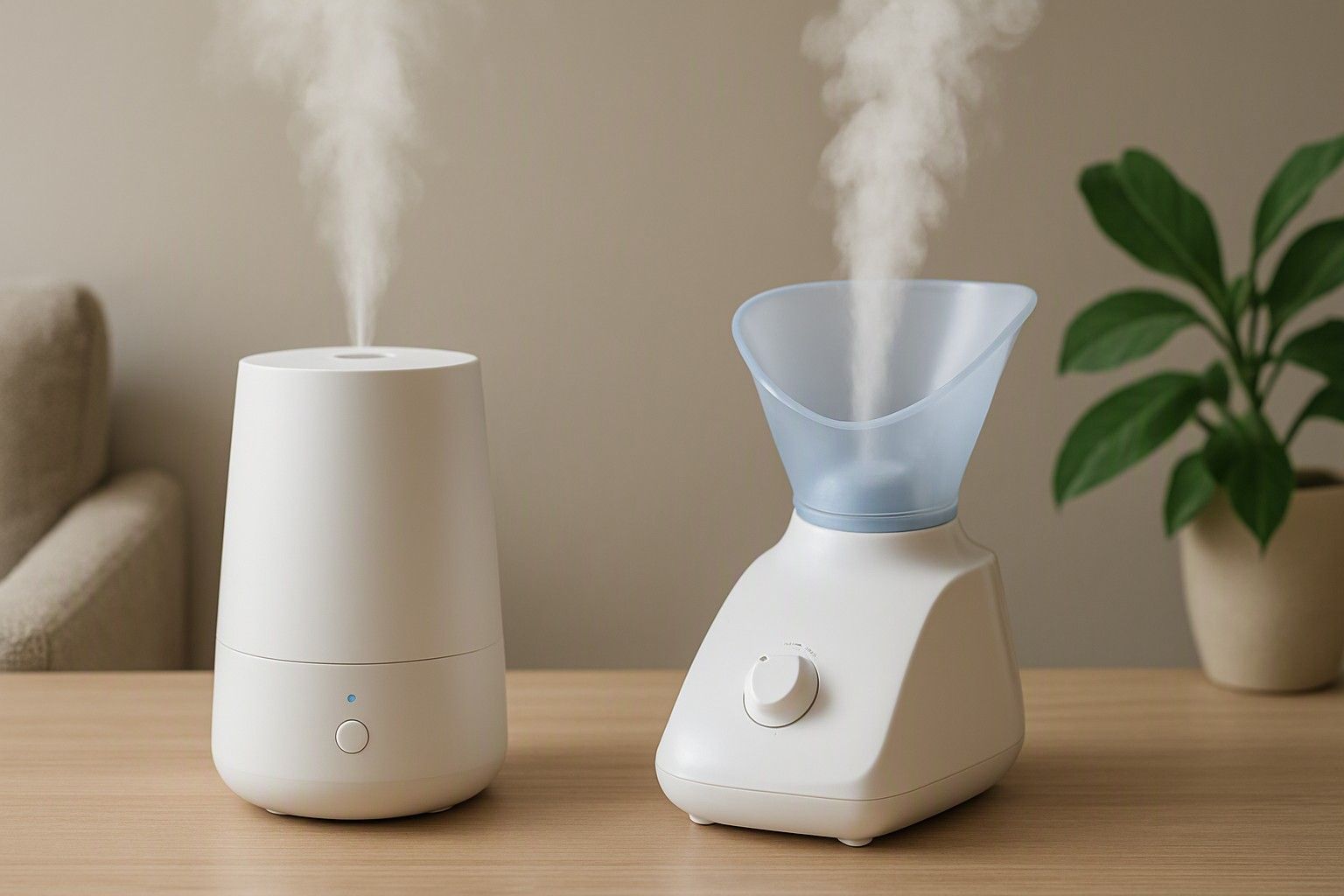
If you already have a steam vaporizer at home and want to know whether a room humidifier would do the same job for a winter blocked nose and cough, the short answer is no. They solve different problems: one gives a few minutes of warm steam, the other keeps the air in a room comfortable for hours. This article helps you decide which one fits your situation, or whether you need both.
Face Steamers and Room Humidifiers Are Not the Same Device
A steam vaporizer, the kind most Indian homes keep in a cupboard for cold season, boils water and sends hot steam to your face through a nozzle or mask. You sit with it for five to ten minutes, breathe in, and switch it off. The steam warms and moistens your nasal passages directly, which can loosen mucus and make a blocked nose feel easier for a while.
A room humidifier does something else. It adds moisture to the air of the whole room, usually as a fine mist, and is meant to run for hours. It does not deliver a concentrated dose to your face, and it does not feel like a steam session. What it does is stop the room from drying out, which matters because dry air irritates a nose and throat that are already inflamed.
So the question is not which one is better, but which problem you have. A steamer is a short-term relief tool. A humidifier changes the conditions you breathe in. Neither treats the infection itself. If you have a high fever, trouble breathing, or symptoms that last more than a week or so, see a doctor rather than adding more devices.
Short Steam Sessions vs All-Night Room Moisture
Steam helps most when you are blocked up and want relief right now. A session before bed can let you breathe more freely for a while. But the effect fades once you step away from the steam, and you cannot run a boiling-water device while you sleep.
That is the gap a humidifier fills. In winter, closed windows, room heaters and blowers pull moisture out of the air, and many people wake up with a dry throat, a crusty nose and a worse cough. A humidifier running through the night keeps the air from drying out, so your airways are less irritated at the time of day when congestion usually feels worst.
The trade-off is control. Aim for a room that feels comfortable, roughly in the 40 to 50 per cent humidity range, not damp. Over-humidifying a small closed room encourages mould and dust mites, and that can make coughs worse, not better. A humidifier with a built-in humidity setting, or a cheap standalone hygrometer, keeps this in check.
In practice, many households use both. The steamer gives a quick clear-out before bed, and the humidifier keeps the room from drying out afterwards.
Burn Risk Around Children With Boiling-Water Devices
Safety is where the two devices differ most. A steam vaporizer holds near-boiling water and releases steam hot enough to scald. Knocked over, it can spill hot water on a child within seconds, and a curious toddler can also reach the steam outlet or the heating element. Children should never use one alone, and a steamer should not sit on a bedside table or the floor of a room where a child sleeps or plays.
A cool-mist humidifier has no boiling water and no hot surface, so a tip-over is a mess rather than an injury. That is a large part of why paediatricians usually prefer cool mist near cots, along with other points on placement and water quality that matter for infants.
If you do use a steamer with an older child, keep sessions short and supervised, place the device on a stable table rather than the bed, and keep the cord out of reach. Let it cool fully before you empty or move it. For a child's room that needs moisture overnight, a boiling-water device is the wrong tool.
Is a Warm-Mist Humidifier the Middle Ground?
Warm-mist humidifiers heat the water before releasing it, so the mist feels mildly warm and the unit looks closer to what people expect from a steamer. Many adults find that more comforting on a cold night, and heating the water means the tank water is boiled before it is released, which some buyers like for hygiene reasons.
But the middle ground has costs. The tank still holds very hot water and the heating element gets hot, so the tip-over and burn risk does not disappear, and it makes these units a poor fit for a child's room. They also draw noticeably more power than cool-mist types because they are heating water for hours. In hard-water areas, the heating element collects scale quickly and needs regular descaling.
The warm mist also cools almost immediately as it enters the room, so the room itself does not become noticeably warmer. If your main reason is comfort for an adult in a cold bedroom, warm mist is reasonable. If safety, running cost or low upkeep matters more, cool mist usually wins. For a full breakdown of how warm-mist units differ from ultrasonic and wick models, including water and cleaning needs, that guide goes deeper.
Cost and Electricity Use Compared
If you already own a steam vaporizer, your cost for using it is close to nothing. It draws a few hundred watts, but only for around ten minutes a session, so the electricity used is small. That is the main reason to keep using it for quick relief rather than replace it.
A room humidifier costs more upfront. Prices in this category run from ₹4,500 to ₹35,000, with an average of ₹12,000. The budget tiers run ₹5,000, ₹10,000 and ₹22,000, so you can match a unit to your room size and how much you want it to do.
Running cost works the other way round. A cool-mist unit, especially an ultrasonic one, draws only a few tens of watts, but it may run six to eight hours a night, so the total energy per night is higher than one short steam session, though still modest. Warm-mist models draw several hundred watts for those same hours and are the most expensive to run. Add the ongoing items: clean water, descaling in hard-water cities, and replacement wicks or filters on some designs.
The sensible way to look at it: the steamer is the cheap short-term tool, while a humidifier is a small purchase that pays off if you face dry winter air every year.
If You Need Moisture for the Whole Room
Choose by your pattern, not by the device. If you only get a blocked nose now and then and a few minutes of steam sorts it out, your existing steamer is enough. If you wake up with a dry, irritated nose or throat every winter, sleep in a heated or closed room, or have a child who needs moist air through the night, a room humidifier is the right addition.
Before buying, check three things. First, room size: a unit that is too small for the room will run flat out and still not shift the humidity, while one that is too large will over-humidify a small bedroom. Second, your tap water: hard water leaves white dust with ultrasonic models and scale in warm-mist ones, so plan for filtered or demineralised water or a design that copes better. Third, how much cleaning you will realistically do, because a neglected tank is worse than no humidifier.
Our main guide explains how to pick a room humidifier that fits your space and water, with the trade-offs laid out for Indian homes and water conditions.
For a blocked nose and cough this winter, keep the steam vaporizer for quick relief before bed, and add a room humidifier only if dry air keeps bringing the problem back overnight. Around children, choose cool mist over anything that holds boiling water. With that settled, you can decide today whether you need one device or both.
Comments
Be the first to comment.