Humidifier vs Air Purifier: Which Helps in a Smoggy, Dry North Indian Winter?
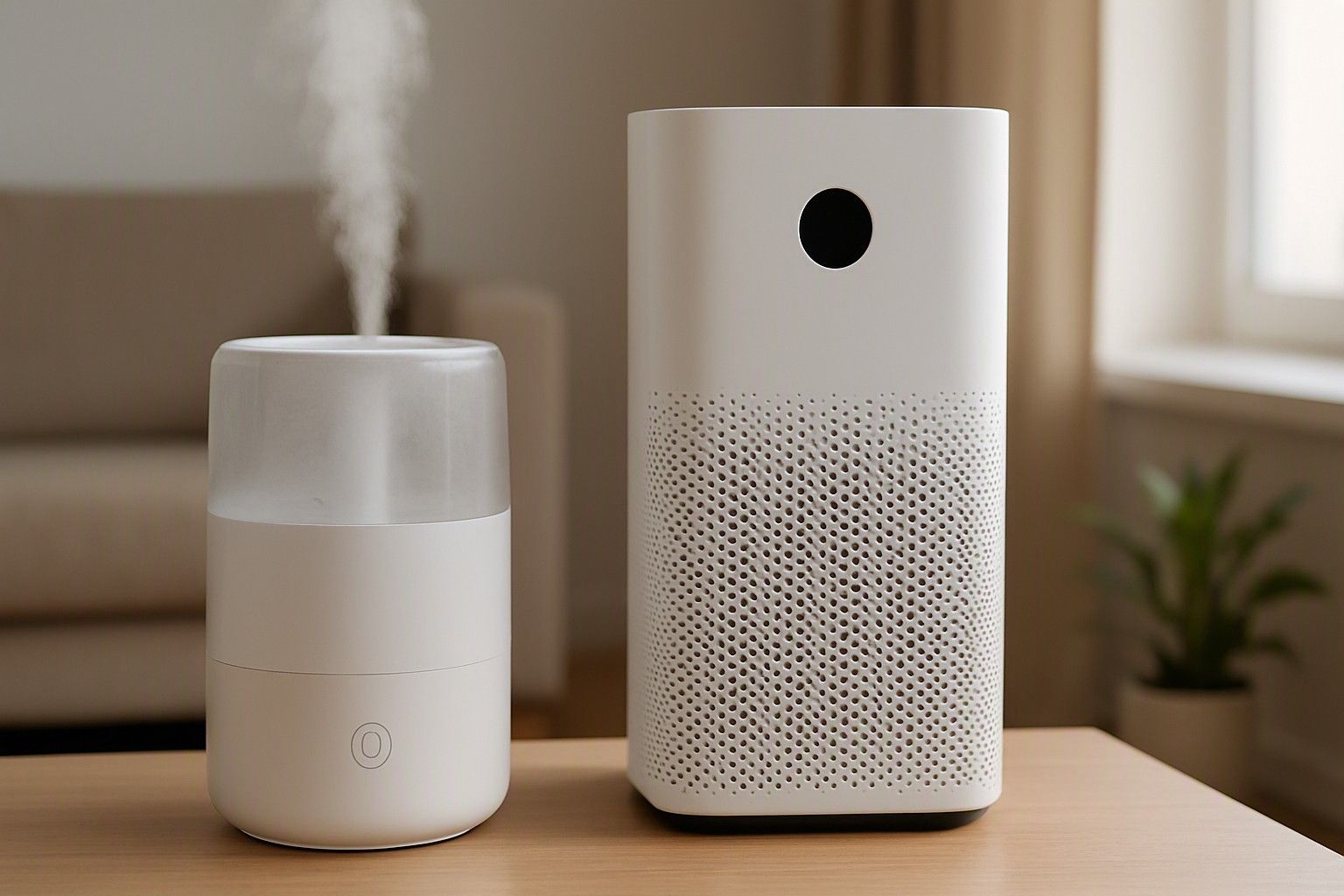
If you live in Delhi-NCR or anywhere else in the North Indian plains, you are probably dealing with two winter problems at once: hazy, polluted air and skin, lips and throat that feel parched. A humidifier fixes only the second and an air purifier fixes only the first, so this article is for anyone trying to decide between them, or whether to run both. By the end you will know which one fits your symptoms and budget.
Two Different Problems: Low Moisture vs Fine Particulates
A humidifier adds water vapour to the air. Its job is to raise indoor humidity, which in winter can drop low enough to cause dry skin, cracked lips, itchy eyes, a scratchy throat, static shocks and the occasional nosebleed. It does nothing about what is floating in the air.
An air purifier does the opposite. It pulls room air through a filter to trap fine particulates such as PM2.5, the tiny particles from vehicle exhaust, crop-residue smoke and combustion that settle deep in the lungs. It does not change how much moisture is in the air, and running one all winter can leave a room feeling no less dry.
So these are not competing products. They solve different problems, and the useful question is which problem is hurting you more right now. Burning eyes, a cough that worsens on high-AQI days, and visible haze indoors point to particulates. Cracked skin, a dry nose on waking and static on clothes point to low moisture. Many North Indian households have both sets of symptoms, which is why the choice feels harder than it should.
Why Winter Smog and Dry Air Arrive Together in North India
Delhi's worst air arrives in the same weeks as its driest indoor conditions, and the two share some causes.
On the pollution side, cold, still winter air tends to trap smoke, vehicle emissions and dust near the ground instead of letting them disperse. Seasonal crop-residue burning in the surrounding states adds to the load. The result is weeks when outdoor air quality stays poor day after day, not just for a few hours.
On the dryness side, cold air holds less moisture to begin with, and the winter spells in the plains are often dry rather than damp. Indoors, things get drier still once you start using a room heater or blower, which warms the air without adding any moisture. Closed windows and doors, meant to keep out both the cold and the smog, also stop fresh humid air from circulating.
The overlap is the trap. Because both problems peak together, buyers often assume one device will handle everything. A humidifier will make a smoggy room feel more comfortable without making it any cleaner, and a purifier will clean the air in a room that still feels like a desert.
Can a Humidifier Reduce PM2.5? What It Does and Doesn't Do
No. A humidifier does not filter anything out of the air, so it cannot lower PM2.5 in your room. If your main worry is the AQI reading on your phone, a humidifier will not move that number in the right direction.
What it does do is make breathing dry, irritated airways more comfortable. Moist nasal passages and throat tissue feel better, and dry coughs often ease. That is a real benefit, but it is comfort, not protection from particulates. A smoggy room with a humidifier is more pleasant and exactly as polluted.
It can also work against you. Some humidifiers, particularly ultrasonic models run on untreated tap water, release a fine mineral mist along with the moisture. Any humidifier with a dirty tank or unchanged water can also put unwanted residue into the air. Running one is fine, but only if you keep it clean and use suitable water.
The honest summary: a humidifier treats dryness, a purifier treats particulates, and neither stands in for the other. If someone in the house has asthma, an allergy or a respiratory condition, the purifier is the one to prioritise, and a doctor's advice should come before either purchase.
Running Both in One Room Without Confusing the Purifier
Running both together works well, but a few habits matter. Most purifiers rely on a sensor that reads particles in the air and then adjusts fan speed or shows an air-quality reading. That sensor cannot tell a harmful smoke particle from a harmless droplet or mineral speck, so a humidifier sitting too close can make the purifier think the air has suddenly turned bad. If you use hard water, mineral dust from ultrasonic models that purifier sensors pick up is the usual cause of a purifier ramping up for no obvious reason.
A few practical steps help:
- Keep distance. Place the two units at opposite ends of the room, and don't point the humidifier's mist toward the purifier's intake or sensor.
- Mind the water. Using filtered or demineralised water in an ultrasonic humidifier reduces the mineral fallout. Evaporative designs hold minerals back in their wick instead of releasing them.
- Watch the humidity. Aim for a comfortable middle range rather than a damp room. Overly humid air encourages mould and dust mites, and that is a new problem you don't want.
- Keep windows closed. A purifier works on a sealed room, and the humidifier benefits from the same.
Are 2-in-1 Purifier-Humidifier Combos Worth Considering?
On paper, a combo is attractive: one device, one plug point, one patch of floor, and no sensor confusion from a second unit sitting nearby. For a small bedroom in a crowded flat, that appeal is genuine.
The trade-offs are real, though. A device built to do two jobs often does each one less strongly than a dedicated unit of the same size. Check how the filtration and moisture output hold up for your room size before assuming a combo covers both. Water and filters also sit close together in one body, so a neglected tank is a bigger problem than it would be in a standalone humidifier.
Maintenance is the other cost. You are signing up for both a filter-replacement schedule and a water-tank cleaning routine, plus the extra wick and filter upkeep combo units demand, and these recurring costs add up over a few winters. If one half breaks, the whole unit is out of action.
For price perspective, standalone humidifiers in this category run from ₹4,500 to ₹35,000. Compare any combo's price against buying a separate purifier and a separate humidifier, not against a single device, before deciding it is good value.
Which to Buy First If Your Budget Covers Only One
Let your symptoms and your local air quality decide.
- Buy the air purifier first if your AQI stays in the poor range for weeks, if anyone at home has asthma, allergies, or heart or lung conditions, or if there are young children or elderly members indoors. Particulate exposure is the more serious risk, and dryness can be managed in the short term with simple measures such as drinking more water and using moisturiser and lip balm.
- Buy the humidifier first if your air quality is not the main concern but you wake up with a dry throat, cracked skin or nosebleeds, or if your room heater runs most of the night and leaves the air parched.
In a Delhi-type winter with both problems, most households are better served by the purifier first and the humidifier second. Humidifier pricing is straightforward: this category spans ₹4,500 to ₹35,000, with a typical price around ₹12,000. The tiers run ₹5,000, ₹10,000 and ₹22,000, so you can add one later without a large jump in spend.
Check purifier prices for your room size before settling on your order of purchase.
Deciding on the Humidifier Side of the Equation
If dry air is a clear part of your winter problem, the next step is to pick the right humidifier for your room, and that is a separate decision with its own checks. Our hub guide covers what to check once you've settled on adding moisture, including tank size against room size, ultrasonic versus evaporative designs, and how your water quality affects the choice.
When you set a budget, keep the category's real price spread in mind. Humidifiers run from ₹4,500 to ₹35,000, and ₹12,000 is a reasonable reference point for what a typical unit costs. Looking at the three tiers, ₹5,000, ₹10,000 and ₹22,000, helps you see what each step up buys you, so you can choose with confidence today and get through the dry weeks ahead comfortably.
So, humidifier or air purifier for a North Indian winter? If smog is your main worry, start with the purifier. If dry skin, throat and nose are the daily annoyance and the air is tolerable, start with the humidifier. And if you face both, run the two together, keep them apart in the room, and use clean water. That settles what to buy first, and the rest is matching the humidifier to your room and budget.
Comments
Be the first to comment.